Early Warning Signs Your Cat Is Sick: 12 Subtle Symptoms Most Owners Miss Until It’s Too Late
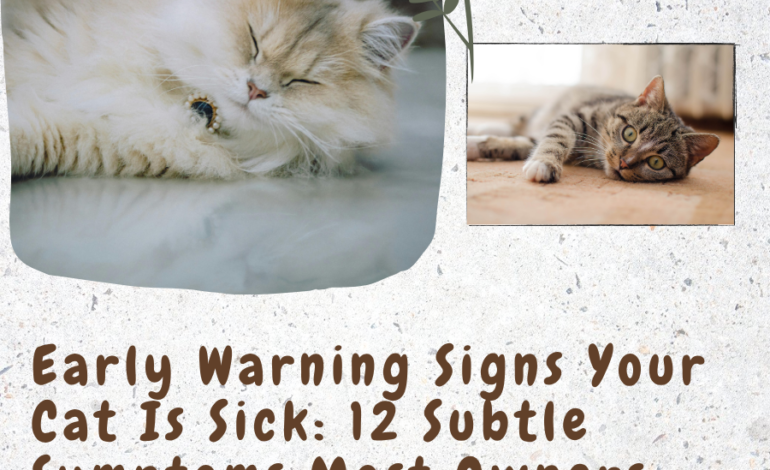
Cats are experts at hiding illness, which is why small, easily overlooked changes can signal something serious beneath the surface. This guide highlights 12 subtle warning signs, from shifts in appetite and behavior to changes in grooming and breathing, that many owners miss until it’s too late. It explains why these signs matter and when to act quickly, helping you catch problems early rather than reacting to emergencies. With simple daily habits and a bit more awareness, you can better understand what your cat is trying to communicate. Because when it comes to their health, noticing the little things can truly save lives.
Cats are phenomenal actors. They curl up in sunny spots, eat their dinner, and purr through an entire evening on the couch, all while quietly battling something serious underneath. It’s not a deception. It’s a survival instinct. And it’s one of the biggest reasons so many cat owners end up blindsided by a health crisis that, in hindsight, had been quietly unfolding for weeks.
Here’s a number worth pausing on: 70% of cats show signs of gum disease by the time they’re three years old. Most owners have no idea. And dental disease is just one of dozens of conditions that quietly take root before a single obvious symptom ever surfaces.
Knowing the early signs your cat is sick, the subtle, easy-to-rationalized ones, is genuinely one of the most important things you can do as a cat owner. This guide walks through 12 sick cat symptoms that tend to fly under the radar, why they matter, and exactly when it’s time to pick up the phone and call your vet.
Why Cats Are Masters at Hiding Pain and Sickness?
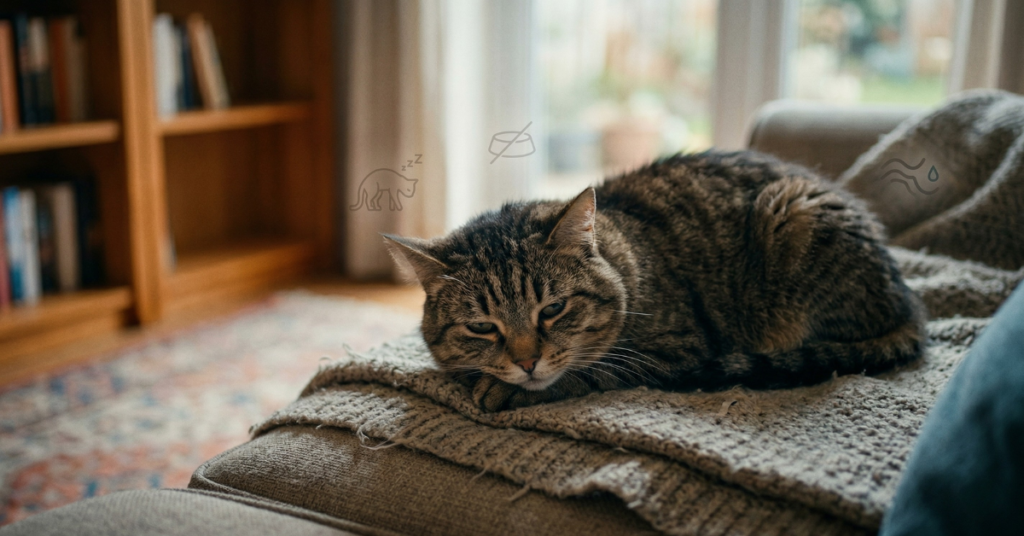
In the wild, a sick or injured animal is a vulnerable one. Predators target weakness, so cats evolved to suppress every visible sign of illness, to act normal, keep moving, and never let on that something was wrong. That instinct didn’t disappear when cats moved indoors. Your perfectly domesticated, couch-lounging tabby still carries it.
The result is that by the time a cat’s illness becomes obvious, obvious enough that even a casual observer would notice, it has often already progressed significantly. Early detection isn’t just helpful. In many cases, it’s the difference between a manageable condition and a medical emergency.
The good news? Cats do leave clues. They’re subtle, easy to dismiss, and easy to chalk up to “just being a cat”, but they’re there. Here’s what to look for.
12 Early Warning Signs Your Cat Is Sick That Most Owners Overlook
1. Increased Hiding or Sleeping in Unusual Spots
Every cat has their spots. The corner of the couch, the foot of the bed, the windowsill they’ve claimed as their own personal kingdom. So when a cat suddenly retreats, under the bed, behind the washing machine, inside a closet they’ve never shown interest in, that shift means something.
Hiding is one of the most consistent signs of illness in cats, and it tends to show up early. It can signal anything from an infection or pain to anxiety, endocrine disorders, or something more serious like cancer. On its own, a single hiding episode isn’t necessarily alarming. Combined with anything else on this list, it warrants attention.
2. Changes in Appetite- Eating Too Much or Too Little
Most cat owners know to worry when their cat stops eating. But increased appetite deserves just as much attention. Both ends of the spectrum are meaningful signs of illness in cats.
A decreased appetite can point to dental pain (cats suffer from gingivitis, periodontitis, and fractured teeth more than most owners realize), nausea, kidney disease, or even cancer. An increased appetite, especially when paired with weight loss, is a hallmark sign of hyperthyroidism and diabetes. If the food bowl situation has changed and it’s been that way for more than a day or two, it’s worth noting.
3. Drinking More Water Than Usual
Cats aren’t big drinkers by nature. A healthy cat consumes roughly one cup of water per ten pounds of body weight daily. So when the water bowl is emptying faster than usual, or your cat starts hovering around the sink or dipping a paw into the toilet, something has shifted.
Increased thirst is one of the most reliable early indicators of serious conditions including diabetes, kidney disease, and hyperthyroidism. The tricky part is that it’s easy to miss, especially in multi-cat households or if the cat drinks from multiple sources. Starting to pay attention to the water bowl is a simple habit that can catch a problem early.
4. Unexplained Weight Loss or Gain
On a ten-pound cat, losing even one pound is significant, the equivalent of a person losing roughly ten percent of their body weight. But because the change happens gradually, it often goes unnoticed until it’s become quite pronounced.
What makes weight changes particularly tricky is that they don’t always correspond with appetite. A cat with hyperthyroidism or diabetes can eat enthusiastically and still lose weight steadily. On the other end, obesity, increasingly common in indoor cats, raises the risk of diabetes, joint disease, and a shortened lifespan. Weighing your cat monthly at home, or at every vet visit, makes these changes visible before they become severe.
One subtle detail worth knowing: a cat that walks up to its food bowl, sniffs, and then backs away without eating isn’t just being picky. That behavior often signals nausea.
5. Lethargy or a Sudden Drop in Activity
Yes, cats sleep a lot. The average adult cat spends somewhere between 16 and 18 hours a day asleep, and that is completely normal. The distinction to watch for isn’t how much they sleep, it’s how they respond when they’re awake.
A healthy cat, even a lazy one, should perk up when you walk into the room, when food is being prepared, or when something interesting catches their attention. A cat that barely reacts, that no longer jumps to their favorite window ledge, that’s slower on the stairs and has lost interest in play, that’s not just a mellow cat. That’s a cat telling you something is off. Arthritis, systemic illness, and pain all show up first as a quiet withdrawal from normal activity.
6. Litter Box Changes- Straining, Accidents, or Blood
Changes in litter box behavior are almost always medical, not behavioral. When a cat starts eliminating outside the box, straining without producing results, urinating in small frequent amounts, or when there’s blood visible in the urine or stool, these are signs that need veterinary attention.
Urinary blockage in particular is a genuine emergency. A cat straining in the litter box repeatedly with little to no output, crying while trying to urinate, or making frequent failed trips is showing the hallmark signs of a blocked urinary tract. Without treatment, it becomes fatal. This one should never be in a “wait and see” category.
7. Poor Coat Condition or Matting
A cat’s coat is a surprisingly accurate health barometer. Cats are meticulous groomers, it’s practically a personality trait. So when the coat starts looking greasy, dull, or matted, the cat isn’t being lazy. They’re either in too much pain to groom, too fatigued, or dealing with an underlying condition that’s affecting their ability to care for themselves.
This is especially common in older cats with arthritis, who can no longer reach their lower back, belly, or the base of their tail without discomfort. A coat that’s lost its usual condition is worth a conversation with your vet.
8. Excessive or Obsessive Grooming
The opposite extreme is equally telling. When a cat grooms compulsively, returning to one spot over and over until the fur is thinning, the skin is red, or there are visible bald patches, that’s a condition called psychogenic alopecia, and it has a range of causes.
It can be stress-driven (a new pet, a move, a change in household routine), or it can be physical: allergies, parasites, a skin infection, hormonal imbalance, or an adverse food reaction. Either way, it’s not something to dismiss as a quirk. It’s the cat’s way of communicating that something is bothering them.
9. Behavioral Shifts- Aggression, Clinginess, or Withdrawal
You know your cat. You know how they greet you, where they like to sit, how they respond to being touched, and what their baseline personality looks like. That knowledge is actually one of your most valuable diagnostic tools.
Sudden aggression, particularly if a cat snaps or bites when touched in a specific spot, is often a pain response. Uncharacteristic clinginess can signal anxiety or distress. Withdrawal from a cat that’s normally social is one of the quieter but more telling cat health symptoms. Any time the personality shifts noticeably and stays shifted, take it seriously.
10. Bad Breath, Drooling, or Pawing at the Face
Cat breath isn’t going to smell like peppermint, but it shouldn’t smell strongly unpleasant either. Foul-smelling breath, particularly a sweet or ammonia-like odor, points to dental disease, oral infection, or in some cases kidney disease.
Watch for drooling that’s unusual for your cat, difficulty or hesitation while eating, swollen or bleeding gums, and pawing at the mouth or face. Given that 70% of cats have gum disease by age three, dental health is genuinely one of the most underestimated aspects of feline care. Regular oral exams and cleanings aren’t optional extras, they prevent serious complications.
11. Breathing Changes- Wheezing, Coughing, or Open-Mouth Breathing
This one is worth stating clearly: open-mouth breathing in a cat is not normal. Unlike dogs, cats don’t pant to cool down. If a cat is breathing with their mouth open outside of an extremely stressful situation (like a car ride), it is a red flag that needs same-day veterinary attention.
Wheezing, raspy or labored breathing, coughing, and rapid chest movement are also signs that something is wrong. Respiratory conditions in cats include asthma, pneumonia, lung cancer, and pleural effusion, and they can deteriorate quickly. Don’t wait on breathing changes.
12. Changes in Vocalization
A cat that’s suddenly more vocal than usual, yowling, meowing repeatedly, howling at night, is trying to communicate something. Increased vocalization is especially common in older cats and is frequently linked to pain, cognitive decline, hyperthyroidism, or anxiety.
The general threshold to keep in mind: if unusual vocalization persists beyond 24 to 36 hours, it’s time to call the vet. And while this might seem like one of the more obvious sick cat symptoms, it’s often explained away (“she’s just chatty”) until it’s been going on long enough to be concerning.
How to Tell If Your Cat Is Sick Enough to Need Urgent Care

The general rule is straightforward: if any of these symptoms persists for more than 24 hours, or if something just feels off even without a clear symptom you can name, call your vet. Instinct matters. If you’ve lived with a cat long enough to know their normal, trust yourself when that normal shifts.
For the following, don’t wait at all, these are same-day emergencies:
- Open-mouth breathing or severe respiratory distress
- Straining in the litter box with no output
- Visible blood in urine or stool
- Complete refusal to eat or drink for more than 24 hours
- Sudden collapse, disorientation, or inability to stand
- Bleeding from the mouth, nose, or any other opening
Calling the vet over something that turns out to be nothing is never the wrong call. Waiting on something serious always is.
Simple Daily Habits That Help You Catch Cat Health Symptoms Early

Catching illness early doesn’t require medical training. It mostly requires consistency and attention. A few simple habits make a real difference:
- Do a quick weekly check: run your hands gently over your cat’s body and check their eyes, ears, gums, and coat for anything new or unusual
- Track litter box habits, frequency, consistency, and any changes are often the first clue something is shifting
- Note the water bowl level each morning and flag when it’s emptying faster than usual
- Weigh your cat monthly, a kitchen scale works fine for small cats
- Keep a simple health log with dates and any observations to share at vet visits
- Schedule wellness exams at least once a year for adult cats and every six months for cats over seven
Your Cat Counts on You to Notice What She Can’t Say
Cats can’t tell you their stomach hurts or that drinking water has become painful. They can’t explain that the litter box trips are getting harder, or that the arthritis in their hips has made jumping feel impossible. What they can do is show you, quietly, subtly, and often in ways that are easy to rationalize away.
Knowing these 12 early warning signs your cat is sick means you’re already ahead of most pet owners. It means the next time something shifts, even something small, you’ll notice. And noticing early is everything.
Bookmark this page, share it with the cat owners in your life, and keep exploring Meow Care Hub for more practical, reliable guidance on keeping your cat healthy for years to come.
Frequently Asked Questions About Sick Cat Symptoms
Behavioral changes almost always come first, before any visible physical symptoms. Watch for increased hiding, changes in how much your cat is eating or drinking, reduced interaction with you, and grooming shifts, either doing it far less or obsessing over one spot. These behavioral signals tend to appear earlier than anything you can see or feel, which is exactly why paying attention to them matters so much.
Duration and combination are the key factors. A single off day, skipping a meal, sleeping more than usual, being a little less social, can be perfectly normal. What’s not normal is when that pattern persists beyond 24 hours or when multiple changes happen at once. A cat that’s hiding, eating less, and not grooming over several days is showing a combination of signs that deserve a vet visit.
Absolutely, and this is one of the most important things cat owners need to understand. Cats with early kidney disease, hyperthyroidism, or even some cancers often maintain a normal appetite and demeanor well into the progression of their illness. This is precisely why routine wellness exams, not just sick visits, are so valuable. Blood work and physical exams catch what behavior alone cannot.
Yes, and it’s deeply rooted in survival instinct. In the wild, showing weakness meant becoming a target. That instinct persists in domestic cats regardless of how safe their environment is. Sudden, increased hiding, particularly when paired with any other symptom on this list, is one of the clearest early signs a cat is sick. It should never be dismissed as the cat just “wanting space.”
At minimum, once a year for adult cats. For cats over seven, every six months is the better standard, senior cats are significantly more prone to conditions like hyperthyroidism, kidney disease, and dental disease, all of which benefit enormously from early detection. Many of the most common feline health conditions are caught during routine wellness exams, long before any symptoms appear at home.
This article is intended for informational purposes only. Always consult a licensed veterinarian for diagnosis, treatment, and medical advice specific to your cat.