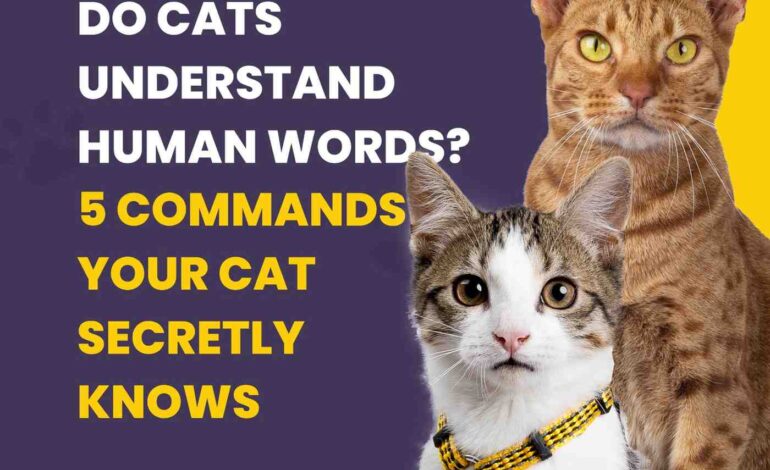
Do Cats Understand Human Words? 5 Commands Your Cat Secretly Knows
Ever feel like your cat understands everything you say, yet chooses to ignore you anyway? You’re not imagining it. Cats can recognize words like their name, “treat,” and even simple commands, but they respond on their own terms. This guide breaks down the science behind how cats process human speech, why they’re so selective, and the five words they almost always understand. More importantly, it shows how to build stronger communication through tone, consistency, and positive associations. If you’ve ever wondered what’s really going on in your cat’s mind, this will change how you talk, and listen, to them.
Your cat materializes out of thin air the moment you say “treat” but develops sudden, complete deafness the instant you tell them to get off the counter. That is not a coincidence. That is strategy.
Cats understand more of what humans say than most owners ever give them credit for. Studies confirm that cats recognize their own names even when spoken by complete strangers. A 2022 study found that cats also know the names of other cats living in the same household. And with consistent training, cats can learn approximately 10 to 15 cue words through sound association alone.
The real question was never whether cats understand us. It was always why they chose to ignore us, and what that selective response reveals about how feline intelligence actually works.
Want to see the whole thing in action? Click here to watch the full video, your feline friend will thank you!
Can Cats Understand Words? Here’s What the Science Actually Says
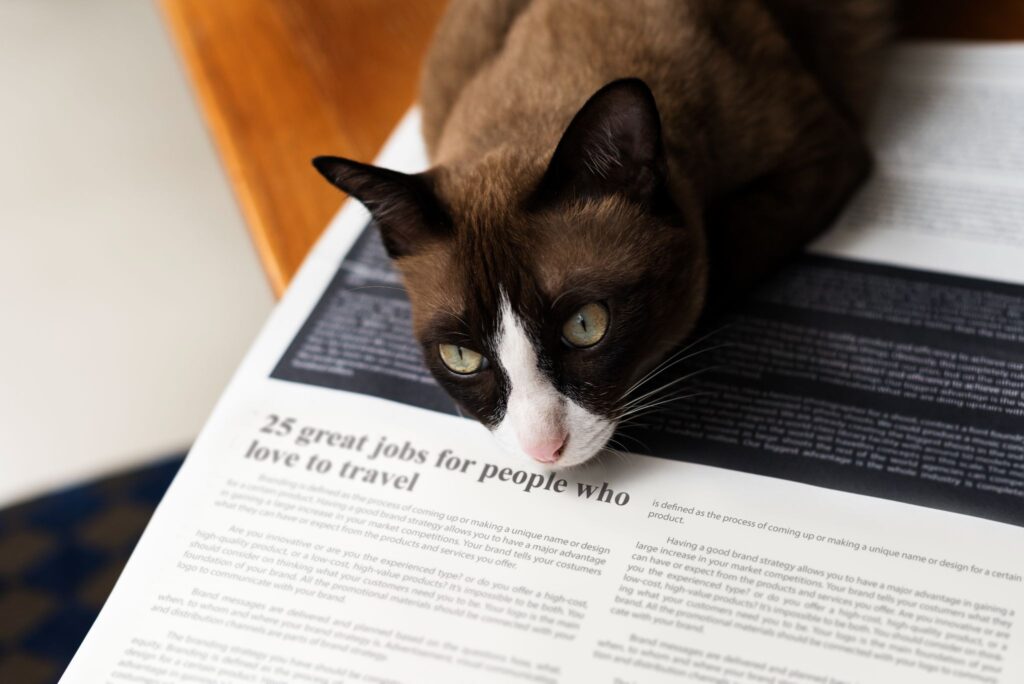
Cats do not process language the way humans do. What they do instead is something called associative concept training, they connect a specific sound to a specific outcome. The word itself carries no meaning. What it predicts is everything.
Think of it this way: dogs are the eager students in the front row, hands raised, ready to please. Cats are the quiet genius in the back of the room, pretending not to listen while catching every single word. They are not ignoring commands out of ignorance. They are weighing whether the outcome is worth their time.
Laura Cassiday, CCBC, owner of Pawsitive Vibes Cat Behavior and Training in Baltimore, puts it plainly: cats are very aware of cues that predict things happening. Say a word consistently before doing something they care about, feeding, play, grooming, and they will learn it. Tone and body language carry just as much weight as the actual word. As Kristiina Wilson, MA, CCBC, notes: it is more about tone and inflection than the exact right word.
5 Words Cats Actually Understand (Even When They Pretend Otherwise)
1. Their Name: The One Word Every Cat Knows
Name recognition in cats is science-backed and well-established. Cats respond to their own name even when a stranger says it, though the response is often subtle, an ear twitch, a slow tail flick, a brief sideways glance. Whether they physically come depends entirely on mood and what they expect will happen next.
Tone matters enormously here. Soft, warm, slightly higher-pitched delivery consistently outperforms flat or sharp tones. If a cat routinely ignores its name, the issue is almost never recognition, it is association. The cat has learned that responding leads to nothing rewarding, or worse, something unpleasant.
2. “No”: Understood. Just Not Always Respected.
Cats understand “no.” They read the tone, register the displeasure, and then make a calculated decision about whether the consequence is worth it. That pause after hearing “no” is not confusing. That is deliberate decision-making.
The smartest cats are often the worst listeners, precisely because they are confident enough to ignore the outcome. Cassiday advises against using “no” as a training cue at all, noting it is too vague for cats to act on reliably. A better approach: teach “off” or “down” for specific unwanted behaviors, and redirect toward something allowed. Cats respond to better deals, not blunt commands.
3. “Come Here”: The Most Misunderstood Command
Cats can absolutely learn to come when called. The catch is that the phrase needs a consistently positive history to work. If “come here” has ever preceded a nail trim, a carrier trip, or being picked up against their will, the cat has already flagged it as a warning signal.
The fix is straightforward: only use “come here” when something genuinely good follows. Treats, play, affection, dinner. Over time the cat stops merely obeying and starts trusting the system, a fundamentally more reliable response than compliance based on fear of consequence. Cats keep score. Build a good record with that phrase and it becomes one of the most useful commands in the household.
4. “Treat” and Food Words: Basically Magic Spells
Food words are among the fastest learned of all human words for one simple reason: the reward is immediate, consistent, and deeply motivating. Say the word, deliver the food, repeat. The brain connects sound directly to outcome.
Some cats learn the association so thoroughly that they recognize the specific sound of a treat bag or container before any word is spoken at all. Here is a useful test: say “treat” in a completely different tone than usual and observe the reaction. Most cats still respond, because they have learned the word itself, not just how it sounds when delivered in a familiar voice.
5. Praise Words: Why “Good Job” Actually Works
This one surprises people. Cats do not just react to words, they read emotion, tone, body language, and facial expression simultaneously. For many cats, genuine positive attention lands as powerfully as food, sometimes more so.
Consistent praise builds trust, reinforces the bond, and makes a cat more likely to engage again in the future. The key is consistency: same warm tone, same genuine delivery, every time. Over time the cat learns that making their person happy carries its own reward. That is the foundation of every successful positive reinforcement training relationship with a cat.
Want to Expand a Cat’s Vocabulary? Here’s How It Actually Works

Start with whatever the individual cat cares about most, food, play, or affection. Say the target word every time before the action happens. Consistency is the entire mechanism. Without it, no association forms.
Button training is worth exploring for cat owners interested in deeper communication. Recordable pet buttons allow cats to push a button linked to a specific word or activity. The modeling method works best: push the button visibly before performing the associated action, then reward the cat with something high-value when they begin pushing it themselves. Wilson recommends button training as a starting point over clicker training, noting it involves less of a learning curve.
One realistic expectation worth setting: not every cat will train visibly. Some learn and simply never show it. Patience is non-negotiable. Any time spent engaging with a cat through training strengthens the relationship regardless of how dramatically the results appear on the surface.
A Cat That Ignores Every Word Is Not a Cat That Doesn’t Understand
The gap between a cat that ignores everything and one that responds reliably is almost never intelligence. It is almost always training consistency and the quality of associations built around specific words.
Start with one word. Pair it with something the cat genuinely loves. Repeat it without fail every single time. Then watch what happens over the next few weeks.
Cats hear more than owners realize. They just reserve the right to decide when it is worth responding. Understanding that distinction changes everything about how to communicate with them.
Explore more cat behavior and communication guidance at Meow Care Hub.
Frequently Asked Questions About Cat Word Recognition
Cats do not understand language like humans, but they do recognize specific words linked to routines like food, play, or affection. Most cats can learn around 10 to 15 cue words through consistent association.
Recognition and response are separate. Cats often recognize their names but choose not to respond based on mood, tone, or expected outcome. If responding is not rewarding, they tend to ignore it.
Cats can learn and respond to cue words, but their motivation is different. Dogs are bred to follow commands, while cats respond based on interest and positive reinforcement.
Food-related words like “treat,” “dinner,” or “eat” are the easiest because they are tied to immediate rewards and repeated daily.
Yes. Tone, pitch, and body language matter more than the actual word. Cats respond better to soft, warm, and consistent tones than to flat or harsh voices.
This article is intended for informational purposes only. For specific behavioral concerns, consult a certified cat behavior consultant or licensed veterinarian.