
Why Does My Female Cat Sleep With Me? 9 Hidden Reasons Explained

Ever wondered why your female cat insists on sleeping right next to you every night? It’s not just about warmth or habit, it’s a powerful mix of trust, instinct, and emotional bonding. From marking you as part of her safe territory to syncing with your routine and even “guarding” you while you sleep, every cuddle carries meaning. This guide breaks down the hidden reasons behind this behavior and what her chosen sleeping spot reveals about how she feels. Once you understand it, that quiet nighttime companionship becomes something much deeper, a daily, silent expression of trust and connection.
The cat appears before the lights go out. She settles in with the quiet certainty of someone who has already decided this spot belongs to her. It feels like affection. It is affection. But what is happening in that moment goes much deeper than warmth or habit.
When a female cat chooses to sleep beside her owner night after night, she is making a territorial decision, a biological one, and an emotional one simultaneously. A study by neuroscientist Paul Zak confirmed that cats experience measurable increases in oxytocin, the bonding hormone, during interaction with their owners. Female cats form very small, carefully chosen inner circles. Being included in one while her defenses are completely lowered is one of the strongest signals of trust she is capable of giving. None of it is random. Space is her language.
Still unsure? Watch the full video here, made just for cat parents like you!
Why It Starts With Territory, Not Just Love
The bed is elevated, warm, and saturated with the owner’s scent, three powerful safety signals in a cat’s mind. By kneading the blankets and rubbing against the person beside her, a female cat overlays her scent onto theirs. She is quietly marking the space as claimed and secure.
Cats have scent glands on their cheeks and paws. Every nuzzle, every gentle rub blends two identities together. To her, the owner is not a separate being. They are family, territory, and security folded into one. This claim is not possessive. It is protective. She is building a world she feels completely safe inside.
9 Real Reasons Your Female Cat Sleeps With You Every Night
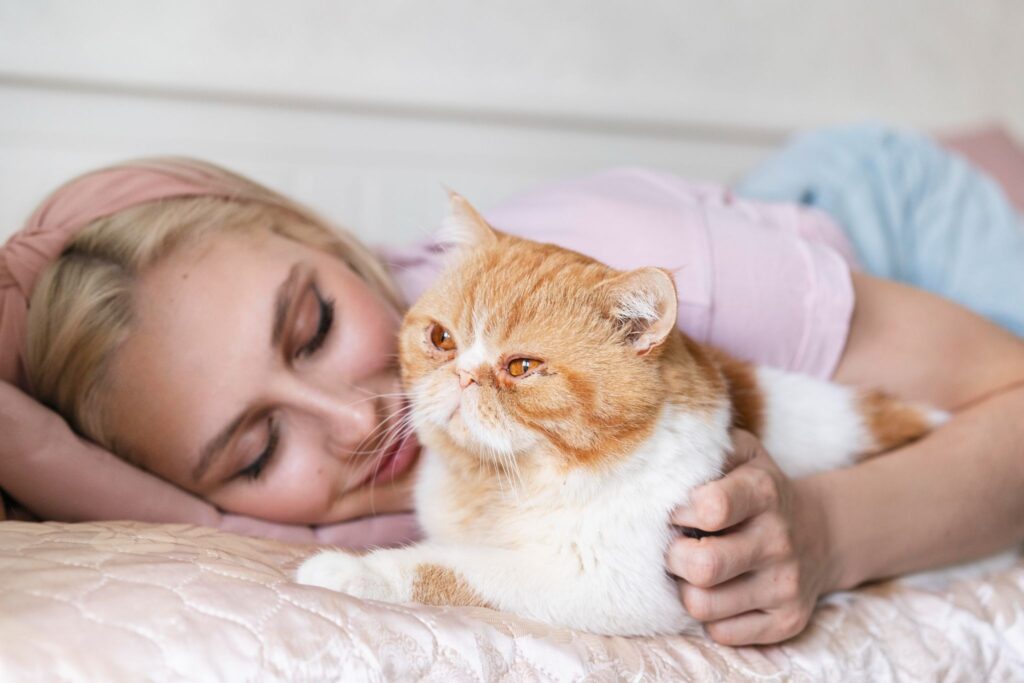
1. You Are Part of Her Inner Circle
Female cats form tightly guarded social bonds with very few individuals. Allowing someone beside her while her defenses are fully lowered is one of the most significant trust gestures in feline behavior. In that moment the owner carries the same emotional weight as the bond she once shared with her mother. That is not a small thing.
2. Your Body Heat Is a Biological Magnet
Cats are instinctive heat seekers. Human body temperature runs warmer than a cat’s baseline, making the owner’s bed one of the most thermally appealing environments available. She adjusts her position through the night, moving closer when the room cools and shifting away when it warms. She functions like a living, self-regulating climate system built for two.
3. Your Scent Lowers Her Stress Hormones
To a cat, scent is emotional language. Being near the owner lowers stress hormones and steadies heart rate. Even when the owner is gone, she may lie on their pillow simply to surround herself with the chemical signature that represents safety. Scent does not just comfort her. It regulates her.
4. She Is Running a Quiet Nightly Security Operation
While the owner drifts into deep sleep, the cat never fully does. Female cats remain lightly alert through the night, waking in brief moments to scan sounds and scents. When the owner stirs, her vigilance sharpens. In her own quiet way, she has appointed herself guardian of the sleeping space, choosing to protect the person she is most bonded with.
5. She Knows the Owner’s Routine Better Than They Do
The click of a light switch, the slowing of footsteps, the deepening rhythm of breathing, she catalogs all of it. This is why many female cats appear in the bedroom before the owner has consciously thought about going to bed, and why they often wake minutes before the alarm sounds. She reads biological signals the conscious mind has not yet processed.
6. Oxytocin Creates Real Chemical Bonding
Each night of close sleeping contact triggers oxytocin in both cat and owner, lowering anxiety, deepening trust, and reinforcing attachment on a biological level. The nightly ritual is not just emotional. It is neurochemical. The bond genuinely deepens through repetition in ways that are measurable in both bodies.
7. She Is Sensitive to Human Emotion
Female cats are remarkably attuned to human emotional states. When stress rises in the room, she notices immediately and often moves closer. Her presence, in turn, calms the owner’s nervous system. This creates a silent feedback loop of mutual regulation that benefits both without either being consciously aware of it happening.
8. She May Be Reverting to Kitten Comfort
Kneading, curling tightly, pressing her face into warmth, these are echoes of early maternal comfort, now reserved for the one she feels safest with. When a female cat displays these behaviors at night, she is expressing the deepest level of emotional security she is capable of. The owner has become her safe place in the way her mother once was.
9. Sleeping Exposed Is a Deliberate Act of Vulnerability
When a female cat sleeps belly up, back turned, or in a completely open position beside her owner, she is choosing to lower her defenses entirely. A cat only surrenders control like this in the presence of someone she trusts completely. That level of relaxation is the highest compliment in feline body language. It is not accidental. It is chosen.
What Her Sleeping Position Actually Tells You
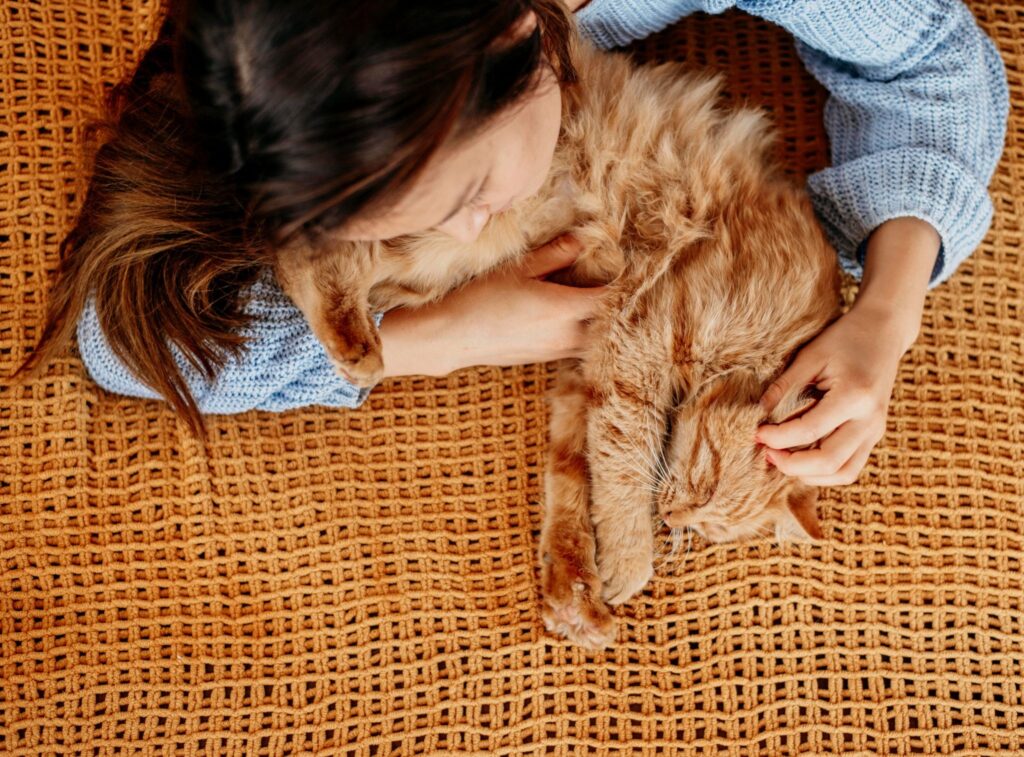
Every position carries meaning. Understanding the difference makes the whole nightly ritual readable.
Curled against the chest, she syncs with the owner’s breathing to calm her nervous system. This is one of the most affectionate positions she can choose, close to the heartbeat, close to the face, as physically connected as possible.
Pressed against the legs, she balances closeness with control. Near enough to feel the bond but positioned to move if needed. This is the most common sleeping arrangement and reflects comfortable independence within trust.
Above the head, she is watching the room. This is the guardian position. She has taken the vantage point and is monitoring the environment while the person beside her sleeps without knowing it.
Against the back, she has placed herself where she cannot see the owner’s face. This signals complete faith. She is relaxed enough to trust the situation entirely without visual confirmation.
Under the covers signals extreme trust and a desire for maximum warmth and protection. This is the most intimate arrangement a cat can choose. Fully enclosed. Fully vulnerable. Fully safe.
When Increased Closeness Should Be Noticed
Most of the time, a female cat sleeping closer is simply a sign of deepening trust. But occasionally, sudden changes in nighttime behavior carry a different message.
Cats hide pain and illness with extraordinary skill. A female cat that suddenly seeks far more closeness than usual, especially one who previously kept more distance, may be finding comfort because something feels wrong internally. Seeking a trusted person is one of the ways cats manage discomfort they cannot communicate any other way.
If increased closeness arrives alongside changes in appetite, unusual lethargy, litter box habit shifts, or nighttime vocalization, a vet conversation is the right next step. The behavior itself is not alarming. The sudden change from baseline is what deserves attention.
Should a Cat Sleep in the Owner’s Bed?

For most healthy adults, co-sleeping with a cat is safe, genuinely beneficial, and bond-deepening for both parties. Considerations worth thinking through include personal allergies and whether the arrangement consistently disrupts sleep quality. If it does, a designated cat sleeping spot placed close to the bed preserves the bond without the disruption.
One firm and non-negotiable point: cats should never sleep in the cot or bed of babies or very young children, regardless of how gentle the cat’s temperament. This is a safety boundary that applies to every household without exception.
Every Night She Chooses You, and That Is Not Nothing
When a female cat curls beside her owner tonight, she is not simply sleeping. She is trusting, protecting, bonding, and choosing that person again in a quiet language only cats speak. The nightly ritual is biological, instinctual, territorial, and deeply affectionate all at once.
Understanding what is actually happening changes the experience of it entirely. That warm weight beside the owner is not just a cat finding a comfortable spot. It is a living declaration of trust from a creature that does not give it easily.
Explore more cat behavior and bonding guidance at Meow Care Hub.
Frequently Asked Questions
Cats choose their preferred human based on trust, scent, consistency, and who makes them feel safest. The choice is intentional, even in a busy household.
This is a strong sign of trust and affection. The heartbeat and warmth are calming, and the cat is choosing maximum closeness.
For most healthy adults, it is safe and can reduce stress and strengthen bonding. However, it is not recommended for babies or very young children.
That spot is warm, scent-rich, and stable. It also allows the cat to stay alert and observe the surroundings while resting.
A sudden change in behaviour can sometimes signal discomfort or illness. If it comes with changes in appetite, energy, or litter habits, a vet check is advisable.
This article is intended for informational purposes only. Always consult a licensed veterinarian for health advice specific to your cat.