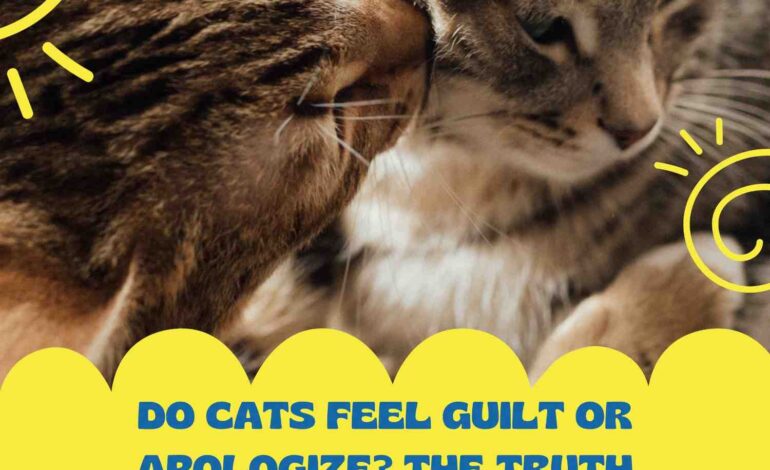
Do Cats Feel Guilt or Apologize? The Truth About Feline Emotions
Ever caught your cat “looking guilty” after making a mess? It might feel like an apology, but it’s not what you think. This guide breaks down the truth about feline emotions, explaining why cats don’t experience guilt the way humans do and what their behavior actually means. From fear responses to subtle “repair” signals like slow blinking and headbutting, you’ll learn how cats communicate after tension and how to respond in a way that builds trust, not fear. If you’ve ever misunderstood your cat’s reactions, this will completely change how you see, and connect with, your feline companion.
Coming home to a shredded sofa, a knocked-over plant, or a demolished roll of paper towels is a familiar experience for most cat owners. The cat looks up. Something in their expression seems almost apologetic, eyes low, ears slightly back, body quieter than usual. It feels like guilt. It looks like guilt.
It is not guilt.
Cats are emotional mysteries. They appear independent, but they feel far more than most people realize. They experience love, happiness, sadness, frustration, and fear. They form deep genuine bonds with their humans and express affection through purring, slow blinking, rubbing against legs, and simply choosing to stay nearby. But guilt, the kind that requires self-reflection and a sense of moral wrongdoing, is not part of their emotional vocabulary. And understanding why changes everything about how to respond when things go wrong.
Want a quick, cat-parent-friendly explanation? Watch the full video here and see it for yourself!
Why Do Cats Look Guilty (And What That Expression Really Means)?
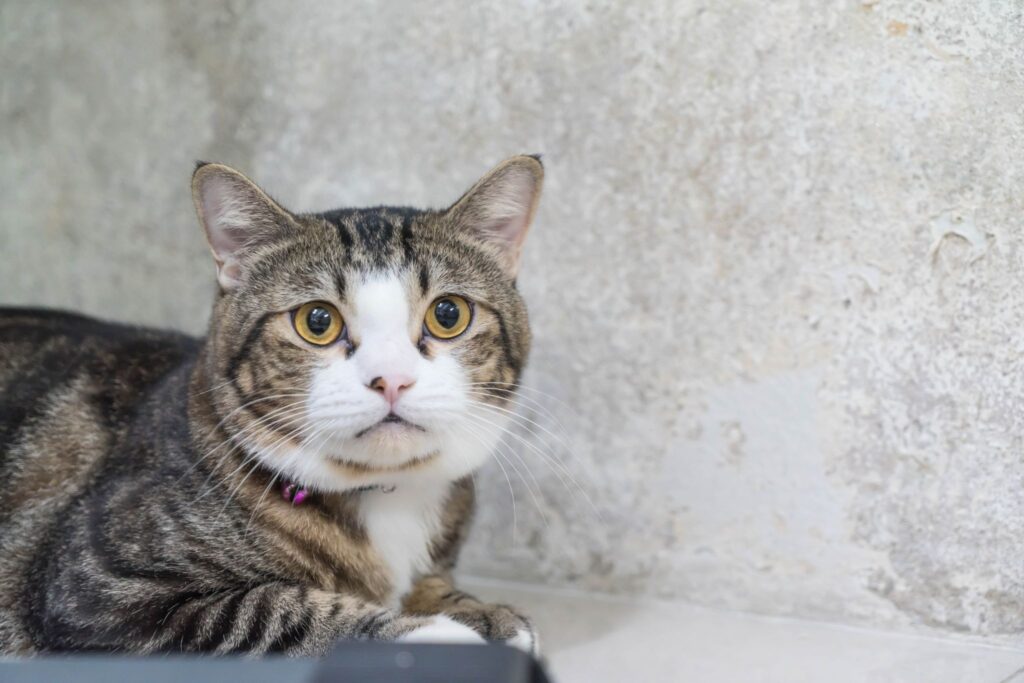
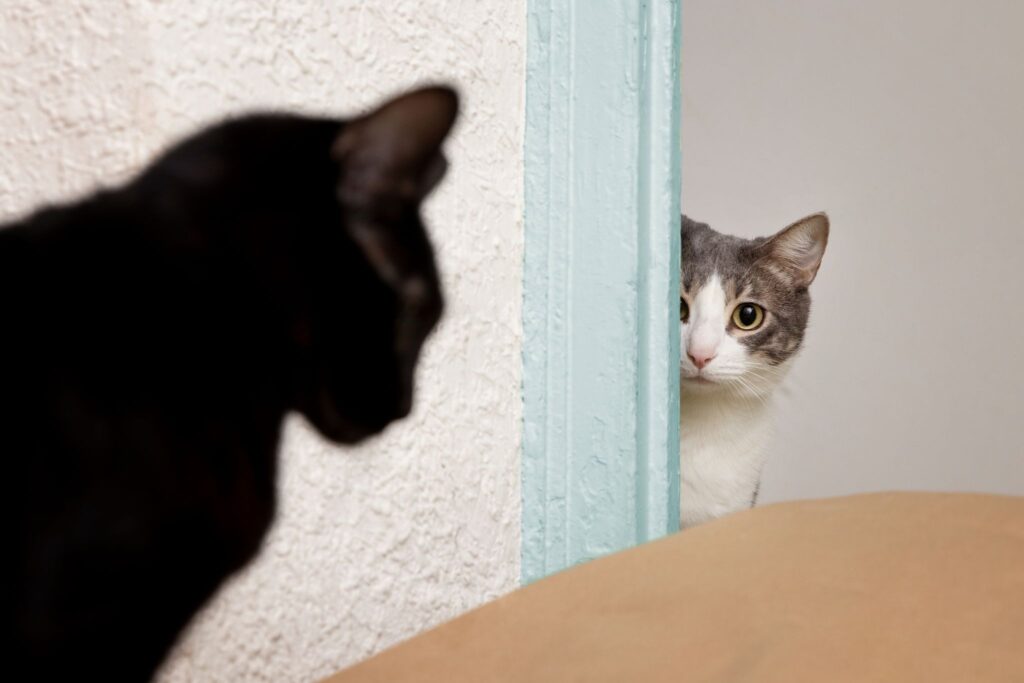
The classic guilty look, lowered eyes, flattened ears, crouching posture, retreating to a corner, is not remorse. It is a fear response. The cat is not thinking about what they did. They are reading what the owner is feeling right now, and reacting to it.
Studies confirm that cats are sensitive to human voice tone and can read emotional states through facial expressions alone. Before a single word is spoken, a cat has already processed the tension in a person’s posture, the shift in their expression, and the edge in their energy. The “guilty look” appears because the cat senses an upset human and is bracing for what comes next.
This is also why most conflicts between cat owners and their cats are better described as a language barrier than a moral failing. Scratching the sofa, knocking over a glass, bringing in a live mouse, all of these are hardwired, instinctual behaviors that feel completely correct from the cat’s perspective. There is no internal framework telling them any of it was wrong. A cat who shredded curtains while the owner was at work was not sitting there feeling bad about it. They were doing what cats do. The confusion arrives with the angry human, not the behavior itself.
Punishing a cat after the fact achieves nothing useful. Cats cannot connect a current consequence to a past action. All delayed punishment creates is fear and confusion, neither of which changes behavior in any productive direction.
Do Cats Apologize? Here Is What Reconnection Actually Looks Like
Cats do not apologize the way humans do. No guilty expression, no remorse, no understanding of what they did wrong. But when a cat senses tension or upset in their person, they often try to close that distance. That reconnection is the closest thing to a feline apology that exists. Their way of saying “I don’t like this tension between us. Let’s be okay.”
Recognizing these repair behaviors for what they are makes a real difference in how the relationship recovers after conflict:
- Purring nearby signals an attempt to restore calm and communicate safety after tension.
- Slow blinking is the deepest trust signal in cat language, essentially visual peace sent across the room.
- Licking or nuzzling is mutual grooming behavior, the cat saying “despite what happened, we are still family.”
- Headbutting or rubbing deposits facial pheromones to reaffirm the bond, one of the most direct reconnection behaviors in the feline repertoire.
- Kneading (making biscuits) is a comfort behavior rooted in kittenhood, seeking safety and offering a quiet peace signal at the same time.
- Showing the belly exposes the most vulnerable part of a cat’s body. After conflict, it is a significant act of trust.
- Bringing gifts, prey, toys, or random objects, is the cat sharing their world. A gesture of inclusion, not guilt.
- Approaching with a tail held high is an open invitation: “don’t shut me out, I still want to be close to you.”
- Initiating play is the most playful form of repair, the cat’s way of rebuilding what feels broken through the thing they do best.
How to Apologize to a Cat?
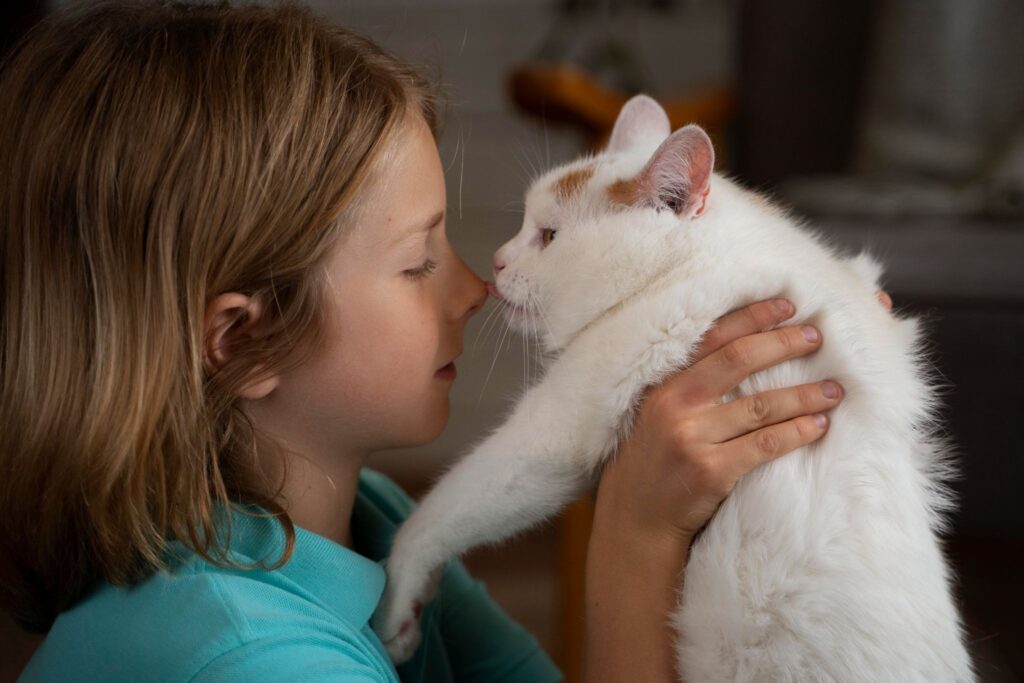
This part rarely makes it into cat behavior articles, but it matters. If a cat gets stepped on, startled by a loud noise, or scared by an accidental reaction, the repair goes both ways.
Give space first. If they run or hide, do not chase them. A retreating cat is asking for time, and following them removes the choice they just made to protect themselves.
Watch body language before re-engaging. Flattened ears, a low tail, or hiding means they are not ready. A relaxed posture and normal movement means the door is open.
Use a calm, quiet voice when approaching. Speak softly. Avoid the high emotional energy that signals threat.
Slow blink deliberately. This is the universal feline signal for “I am not a threat and I mean you no harm.” It works.
Offer a treat when they approach voluntarily. Positive association rebuilds trust faster than any spoken reassurance.
Avoid forced contact. No grabbing, hugging, or picking up a cat that has not chosen to come close yet. What feels loving to humans often feels threatening to a cat who is not ready.
Do Cats Forgive?
Yes, and faster than most people expect. Accidental incidents are typically processed and forgotten within approximately 16 hours. Cats do not hold grudges over single events.
Repeated mistreatment is a different matter. Consistent negative interactions are remembered not as anger but as learned self-protection. The cat is not being difficult. They are being careful.
The signs that forgiveness has happened are entirely behavioral: the cat relaxes, approaches voluntarily, purrs, or settles nearby without being coaxed. Cats do not understand spoken apologies. They understand tone, gentleness, and consistent intention. They do not hear “sorry.” They feel it. And when they choose to come back after conflict, that is love expressed in the only language they have.
What to Do Instead of Punishing a Cat?
Since punishment after the fact is ineffective, the more useful question is what actually works.
Redirect rather than refuse. Furniture scratching is territorial and instinctual, placing a large sturdy cat tree near the most-scratched item gives the cat something they can feel proud to claim. Litter box accidents should prompt a vet visit first to rule out medical causes, then an audit of the box situation (one per cat plus one extra, placed in different rooms). Ankle attacking is hunting behavior, laser pointers and fishing pole wand toys redirect that drive far more effectively than any correction. Positive reinforcement consistently outperforms punishment. Reward the behavior that is wanted. Redirect the behavior that is not.
Cats Do Not Say Sorry With Words: They Say It With Everything Else
Cats feel more than most people realize. They just communicate it entirely differently. The guilty look is not guilt, it is a cat reading an upset human and trying to understand what comes next. When a cat slowly blinks, headbutts, or chooses to curl up next to someone after a conflict, that is a complete apology in every language that matters to them.
Understanding this does not just explain the behavior. It changes the entire dynamic of living with a cat.
Explore more cat behavior and communication guidance at Meow Care Hub.
Frequently Asked Questions About Cat Guilt and Feline Emotions
Cats do not experience guilt in the human sense. Behaviours like scratching or knocking things over are natural to them. What looks like guilt is usually a response to a human’s tone or reaction, not an understanding of “wrong.”
Cats are highly sensitive to body language and facial expressions. They can read tension or frustration quickly. The “guilty look” is often a fear or anticipation response to human emotion, not awareness of their behaviour.
Cats use behaviour to repair social connection. Slow blinking, headbutting, rubbing, purring, kneading, or approaching with a relaxed posture are signs they are trying to restore calm and comfort.
Most short, accidental incidents are forgotten within hours. Cats do not hold grudges over one-time events, but repeated negative experiences can make them more cautious or avoidant over time.
Give the cat space first. When it feels safe, use a calm voice, slow blinking, and let the cat approach on its own. Offering a treat can help. Avoid forcing contact, as patience and consistency rebuild trust more effectively.
This article is intended for informational purposes only. For specific behavioral concerns, consult a certified cat behavior consultant or licensed veterinarian.