Dry Food vs. Wet Food vs. Raw Diet: The Honest Truth Every Cat Owner Needs to Hear
Choosing the right food for your cat can feel confusing with so many bold claims on every package. This guide cuts through the noise and explains the real differences between dry, wet, and raw diets in a simple, honest way. It highlights what cats actually need as obligate carnivores, the importance of proper nutrition, and the risks often overlooked, especially with raw feeding. You’ll also find practical advice on balancing cost, convenience, and your cat’s health. In the end, it’s not about trends or marketing, it’s about feeding your cat a safe, balanced diet that truly supports their long-term well-being.
Standing in the cat food aisle is genuinely overwhelming. One bag promises “ancestral nutrition.” Another says “raw inspired.” A third carries a vet’s face on the front. Every single one claims to be the best thing you could possibly feed your cat.
Here’s the truth: the cat food industry is loud, opinionated, and full of marketing claims that outpace the actual science by a wide margin. What your cat actually needs cuts through all of that noise, and it’s simpler than the labels want you to believe.
Nearly 25% of commercially available raw pet food samples test positive for harmful bacteria including Salmonella and Listeria. Dry food contains only about 10% water while wet food sits at around 70%. And taurine deficiency, common in poorly formulated homemade or raw diets, directly causes heart disease and blindness in cats. These aren’t scare tactics. They’re the numbers that should be guiding the conversation.
Here’s the honest breakdown of every option.
Before Comparing Options, Here’s What Every Cat Actually Needs
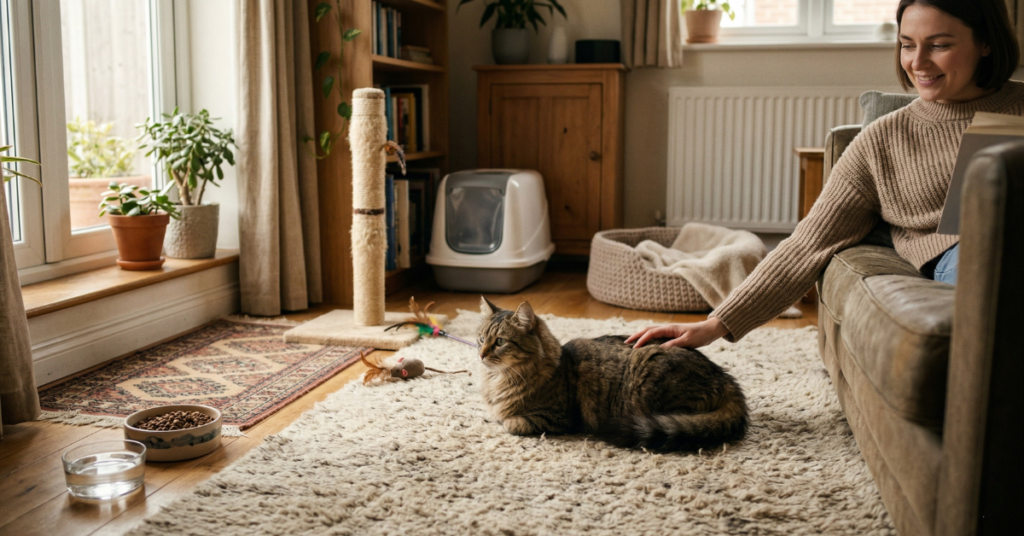
Cats are obligate carnivores. That’s not a marketing term, it’s a biological reality that shapes everything about how they should eat. Unlike dogs or humans, cats cannot synthesize certain nutrients on their own. Taurine, arachidonic acid, vitamin A, and niacin all have to come directly from animal-based food sources. Taurine alone, if deficient, causes irreversible heart disease and blindness.
This matters because it means no diet, dry, wet, or raw, is automatically appropriate just because it contains meat. It has to be nutritionally complete and properly balanced. The simplest way to verify this on any commercial food is to look for the AAFCO nutritional adequacy statement on the packaging. That statement confirms the food meets established minimum nutritional requirements for cats. If it isn’t there, keep looking.
Dry Cat Food- Convenient, Affordable, but Not the Full Picture
Dry food is made by cooking meats, vitamins, minerals, and fats together at high temperature and pressure, a process that actually makes starches more digestible. Fat is then sprayed on afterward for palatability. The end result is a product that’s roughly 10% moisture and 90% everything else.
The case for dry food is real. It’s the most affordable option on the market, requires no refrigeration, works well in automatic feeders and puzzle toys, and has a long shelf life. For budget-conscious households or anyone feeding community cats, dry food makes practical sense.
But the drawbacks deserve honest attention. The low moisture content is a genuine concern, cats evolved as desert animals who typically get most of their hydration from prey, not a water bowl. A dry-food-only diet can put quiet pressure on the kidneys and urinary tract over time. There’s also a documented correlation between dry food and obesity, largely because it’s so commonly free-fed. When food sits out all day, it’s nearly impossible to track how much a cat is actually eating or to notice when they’ve quietly stopped.
Older cats with dental disease or missing teeth often struggle with kibble too. It’s a detail that gets overlooked until a cat starts losing weight and the owner can’t figure out why.
Wet Cat Food- The Hydration Advantage Most Owners Underestimate
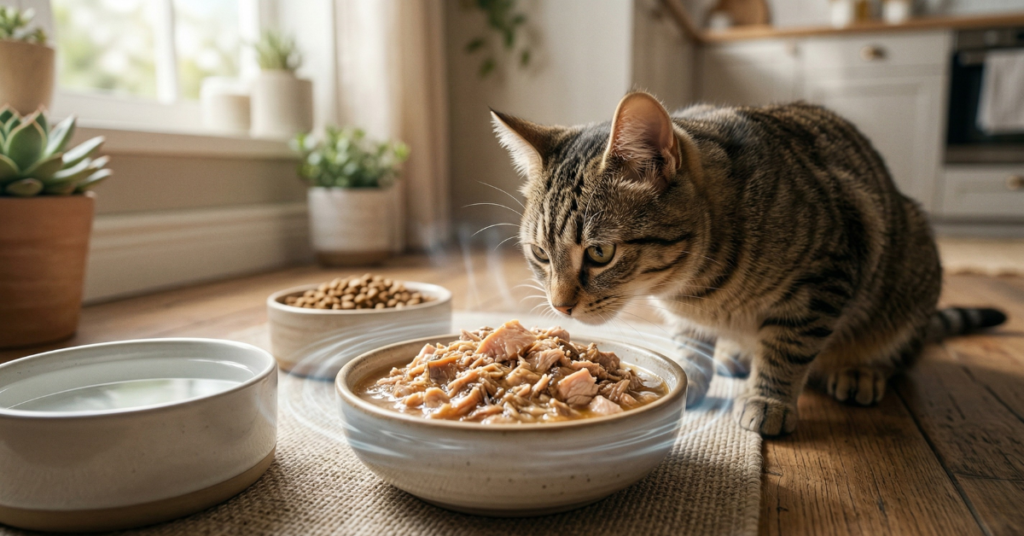
Wet food is made from fresh or frozen meats blended with water, fats, and vitamins, then sealed and heated to destroy pathogens before it ever reaches the shelf. That process matters. The heating step is a safety feature that raw food skips entirely.
At approximately 70% moisture, wet food comes far closer to the natural water content of the small prey cats evolved eating. That hydration advantage is significant, particularly for cats with kidney disease, diabetes, or lower urinary tract disease, where increased water intake isn’t just beneficial, it’s often medically necessary.
Wet food is also more palatable than dry, which makes it a practical lifesaver with picky eaters or cats recovering from illness who need appetite encouragement. It’s easier to eat for older cats, easier to portion accurately, and easier to monitor, when a cat doesn’t finish their wet food, you know it immediately.
The drawbacks are mostly logistical. Wet food costs more than dry, and once opened it has a 24-hour shelf life in the refrigerator. Leaving it out for more than a few hours creates a real bacterial contamination risk. These are manageable issues, but they require a bit more attentiveness than a bowl of dry food that sits out all day.
Raw Diet for Cats- The Honest, Evidence-Based Truth
The raw diet argument starts with an appealing premise: cats in the wild eat raw food, so raw food must be the most natural and optimal choice for domestic cats. It sounds logical. It doesn’t hold up.
“Natural” and “optimal” are not the same thing, researchers call this the appeal to nature fallacy. Domestic cats live significantly longer than their wild relatives and face entirely different health demands. The claim that raw is superior requires experimental evidence, and that evidence simply doesn’t exist yet.
One peer-reviewed study comparing raw, cooked, and commercial dry diets found no meaningful difference between raw and properly cooked fresh diets across any measured health marker, blood work, digestibility, stool quality, or urine values. The authors concluded that cooking may be an appropriate modification precisely because it eliminates microbial risk without changing outcomes.
What is well established is the risk. Nearly 25% of commercially available raw pet food samples contain harmful bacteria. Cats can carry Salmonella and Listeria without any symptoms, silently spreading pathogens through grooming and litter boxes. Salmonella causes over 1.2 million human infections annually in the US. Listeria, while rarer, is particularly devastating for pregnant women, whose babies face risks of stillbirth, premature birth, and in up to one-third of affected newborns, death despite treatment.
Home-prepared raw diets add nutritional risk on top of that. Thiamine deficiency is common in poorly balanced raw diets and affects nerve and brain function. Unground bones cause intestinal blockages and lacerations. The FDA, CDC, and AVMA all advise against feeding raw meat to cats.
If raw is still the chosen path, stick to commercially prepared formulas developed by a veterinary nutritionist, meeting WSAVA guidelines with documented feeding trials. Use gloves, disinfect prep surfaces, store in the freezer, and thaw only in the refrigerator or microwave. Pregnant women in the household should hand off litter box duties entirely given the Toxoplasmosis risk.
So What Is the Best Diet for Cats?
There is no universal answer, and anyone who tells you otherwise is selling something.
The right diet depends on the individual cat: their age, weight, health conditions, hydration habits, and preferences. Some cats refuse wet food. Others won’t touch dry. Working with what a cat will actually eat is part of the practical reality.
For most healthy adult cats, high-quality wet food, or a wet and dry combination, covers nutritional needs well while supporting hydration. Wet at one meal, dry at the other balances hydration benefits with cost and convenience. For cats with kidney disease, diabetes, or urinary issues, wet food is the clear frontrunner. For overweight cats, portion-controlled feeding is essential over free-feeding dry.
Whatever the choice: meat or meat by-products should appear first on the ingredient list, the packaging should carry an AAFCO nutritional adequacy statement, and regular vet input is non-negotiable. Avoid any homemade diet, raw or cooked, unless a veterinary nutritionist is directly involved.
Practical Feeding Tips That Actually Make a Difference
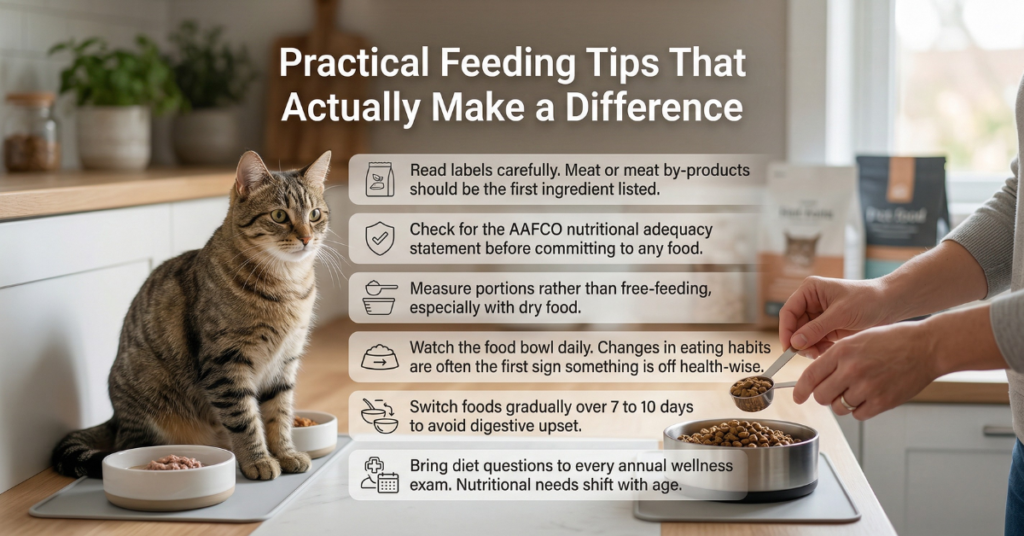
- Read labels carefully. Meat or meat by-products should be the first ingredient listed.
- Check for the AAFCO nutritional adequacy statement before committing to any food.
- Measure portions rather than free-feeding, especially with dry food.
- Watch the food bowl daily. Changes in eating habits are often the first sign something is off health-wise.
- Switch foods gradually over 7 to 10 days to avoid digestive upset.
- Bring diet questions to every annual wellness exam. Nutritional needs shift with age, and what worked at two may not be ideal at twelve.
Feed What Works, For Your Cat, Not the Marketing
The best cat food is the one that is nutritionally complete, appropriate for your cat’s specific health needs, and realistic for your lifestyle and budget. The loudest voices in the cat food debate are often the ones with something to sell. Stay grounded in evidence, stay in regular contact with your vet, and trust what the data actually shows rather than what the packaging promises.
Your cat doesn’t need ancestral nutrition or raw inspiration. They need a balanced, safe, species-appropriate diet served consistently by someone who pays attention. That’s already you.
Explore more practical, honest cat care guidance at Meow Care Hub.
Frequently Asked Questions
Wet food has a clear advantage for hydration, which directly benefits kidney and urinary tract health. Dry food wins on cost and convenience. For most cats, a combination of both is the most practical approach. Your vet can guide the decision based on your cat’s specific health needs.
Current scientific evidence does not support that claim. The most relevant peer-reviewed research found no meaningful health difference between raw and properly cooked fresh diets across any measured marker. Meanwhile, the risks, bacterial contamination, nutrient deficiencies, and human health hazards, are well documented and officially recognized by the FDA, CDC, and AVMA.
Yes, and for many cats this is the most practical approach. Wet food at one meal and dry at the other balances hydration with convenience and cost. Work with your vet to calculate the right daily portions so the combination does not lead to overfeeding.
Look for the AAFCO nutritional adequacy statement on the packaging, that is the clearest verification available. Also confirm that meat or meat by-products appear first on the ingredient list. Any food without that statement, including most homemade diets, carries a real risk of nutritional gaps.
Significant ones. Nearly 25% of commercial raw pet foods test positive for harmful bacteria, and home-prepared versions are nearly impossible to balance nutritionally without a veterinary nutritionist. Thiamine deficiency, bone-related injuries, and bacterial transmission to humans, including Salmonella and Listeria, are all documented concerns. A vet-formulated, AAFCO-approved commercial diet is the safer choice by a considerable margin.
This article is intended for informational purposes only. Always consult a licensed veterinarian for diagnosis, treatment, and nutritional advice specific to your cat.