Cat Grief Is Real: How to Help Your Cat Cope After Losing a Feline Companion or Human
Losing a companion affects cats more deeply than most people realize. This piece explores the reality of feline grief, from subtle behavior changes to more serious signs like appetite loss and anxiety. It explains why cats react the way they do and offers practical, compassionate ways to support them, from maintaining routines to creating a comforting environment. The guide also highlights when to seek veterinary help and why rushing to adopt another pet may not be the answer. At its core, it’s a reminder that cats feel loss too, and with patience, care, and presence, they can slowly find their way back.
When Steve died, his humans weren’t the only ones who fell apart.
Steve was the undisputed leader of an 11-cat household, patient, gentle, the cat who gave everyone head washings and kept the peace. When he passed after a short battle with cancer, the grief didn’t stay with the people who loved him. It rippled through every cat he left behind. Most of them stopped eating within days. Sleeping spots shifted to lonelier corners of the house. One cat became aggressive, lashing out at housemates he’d lived with for years. Another parked himself at the front door and cried every single time his owners left, because his best friend had walked out that door once and never came back.
That’s feline grief. It’s real, it’s documented, and it looks a lot like what we feel ourselves.
Research backs this up: approximately 65% of cats show significant behavioral changes after losing a bonded companion. Up to 70% change their vocal patterns. Between 46% and 65% reduce their food intake, sometimes dangerously so. And yet so many cat owners are caught completely off guard when it happens, unsure whether what they’re seeing is grief or something else entirely.
This guide is for those owners. The ones sitting with a cat who isn’t quite herself anymore, wondering what to do next.
Do Cats Grieve? Here’s What Science and Real Life Both Say
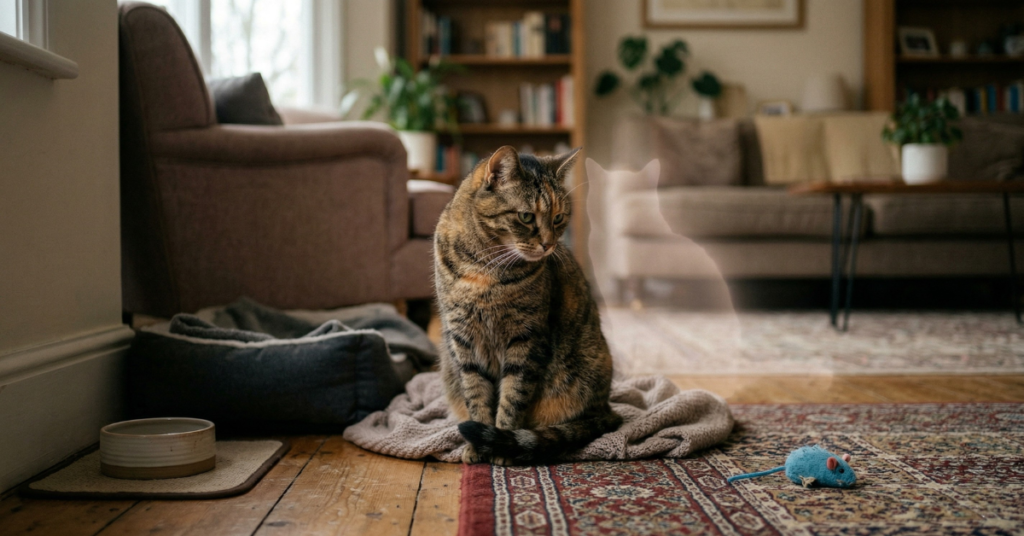
Yes, though it works differently than human grief.
Cats form genuine attachment bonds with the animals and people they live with. When those bonds break, cats experience loss through what researchers call the panic-grief motivational system, a real neurological response to sudden separation from a bonded companion. They don’t ruminate the way people do, but the disruption to their world is immediate and visceral.
Not every cat will grieve visibly. Some show dramatic changes. Others seem unaffected entirely. Both responses are completely normal. For cats that do show a response, grief tends to move through three stages: restlessness, depression, and eventually acceptance, on their own timeline, not ours.
What Triggers Grief in Cats?
Several types of loss can set it off. The death of a bonded companion cat, especially a littermate, is one of the most common triggers, with surviving cats sometimes searching and calling out for weeks. Even cats that had a complicated relationship with a housemate may grieve their absence.
Cats also grieve the loss of a beloved family dog, a primary carer who has passed away or moved into care, and in the case of mother cats, the premature loss or separation from kittens. Some cats additionally develop a fear response to the specific room where a companion died at home, worth knowing when managing their environment afterward.
Cat Grieving Symptoms to Watch For
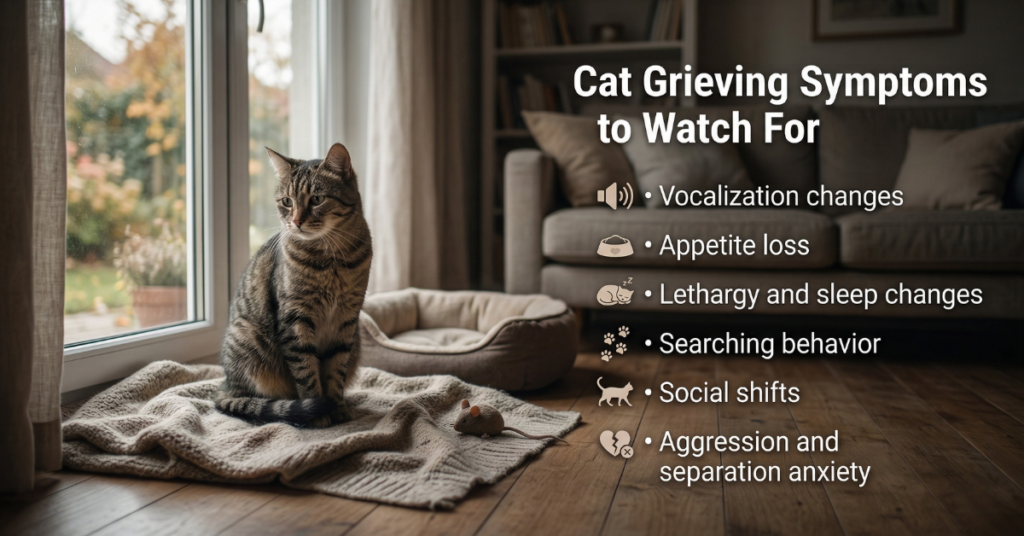
Grief in cats gets misread constantly, as illness, as behavioral problems, or simply as “being weird.” Here’s what it actually looks like.
- Vocalization changes show up in up to 70% of grieving cats, increased meowing, night yowling, or a haunting, repetitive calling out while searching the house.
- Appetite loss affects nearly half to two-thirds of grieving cats. This one carries a serious health risk: if a cat refuses food for more than 24 to 48 hours, hepatic lipidosis, a potentially fatal liver condition, can develop quickly. It’s not a symptom to watch passively.
- Lethargy and sleep changes are normal in early grief. Watch whether the cat still responds to gentle interaction. A cat that’s withdrawn but reachable is different from one that’s completely unresponsive.
- Searching behavior, pacing, sniffing the companion’s old spots, lingering in doorways, is the cat actively looking for who is gone. It’s heartbreaking to witness and completely normal.
- Social shifts go both ways. A suddenly clingy cat and a cat that hasn’t left the closet in days are both grieving, just in different dialects.
- Aggression and separation anxiety are also documented grief responses. The aggression is displaced and overwhelmed. The separation anxiety comes from a cat that has just learned companions leave and don’t always return.
How to Help a Grieving Cat
Keep the routine consistent. Predictability is the most stabilizing thing available right now. Same mealtimes, same play sessions, same bedtimes. Cats read human emotions accurately, staying grounded yourself genuinely helps them feel safer.
Don’t clean everything away at once. Cats navigate by scent. The bunting pheromones a companion leaves on furniture and bedding communicate safety and familiarity. Removing everything in one go is far more distressing than letting the scent fade gradually. Take items away slowly, one at a time, over weeks.
Encourage eating without pressure. Warm the food to intensify the smell. Add low-sodium broth, tuna water, or meat-based baby food. Try hand feeding or sitting beside them during meals. Food puzzles make eating feel rewarding rather than forced. If nothing works within 24 hours, call the vet immediately.
Offer affection on their terms. Follow their lead completely. If clingy, give more. If withdrawn, be present without crowding. Extra brushing sessions work well for cats who enjoy grooming, physical connection without emotional demand.
Enrich the environment. A simple DIY exploration box, a cardboard box filled with crinkly paper, catnip, treats, and natural items refreshed daily, gives a grieving cat something constructive to investigate. Stream Cat TV on YouTube. Install a window bird feeder. Aim for at least one active 20-minute play session daily. Feliway Optimum diffusers (one per 500 square feet) and Music for Cats, developed specifically for feline nervous systems, are both worth using during this period.
Consider medication when needed. If behavioral support alone isn’t working after several weeks, particularly with severe aggression or separation anxiety, fluoxetine is a legitimate, well-documented option. Available as a pill, liquid, or transdermal ear gel, it works as a stabilizing bridge while routine and enrichment do their work. Always under veterinary guidance, with a plan to taper off once the cat has settled.
Should You Get Another Cat?
Not yet. A grieving cat is stressed, territorial, and emotionally raw, not ready for a new housemate. Wait until the surviving cat has clearly found a new normal, typically several weeks to months. When the time is right, consider foster-to-adopt first to gauge readiness without full commitment. Introductions should be gradual: separate rooms, scent swapping, room rotation, visual introductions, then supervised meetings. Follow the golden rule, one litter box per cat plus one extra.
When to Call the Vet
Don’t wait if your cat refuses food beyond 24 hours, vomits or has diarrhea persistently, shows extreme aggression that doesn’t respond to enrichment, or shows no improvement after several weeks. These aren’t overreactions. They’re the moments where early intervention makes a real difference.
Your Presence Is the Most Powerful Medicine
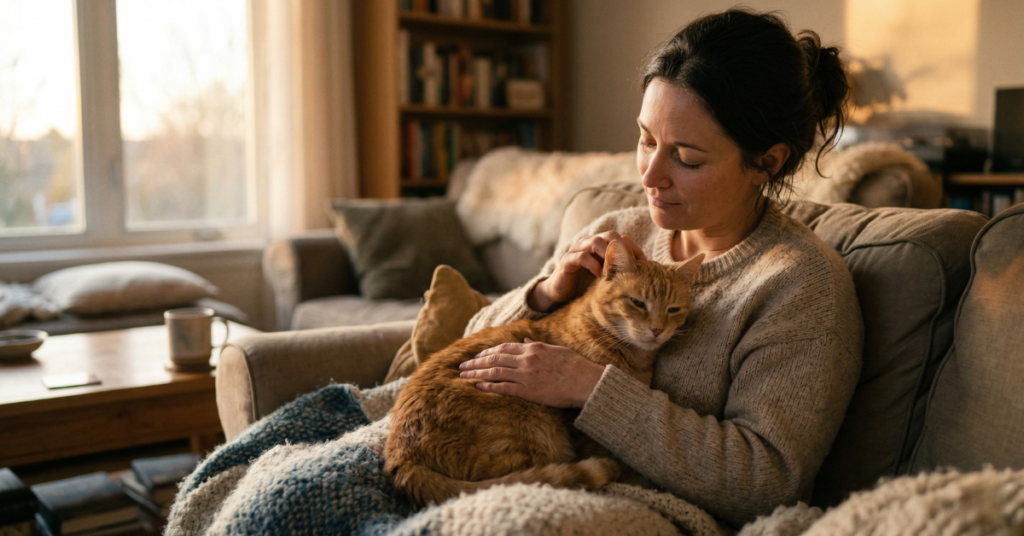
Cats heal in the presence of people who notice and show up. The fact that you’re here, trying to understand what your cat is going through, already matters more than you probably realize.
Grief takes time, for your cat and for you. Be patient with both. Routine, scent, enrichment, and your calm steady presence are genuinely powerful tools. Use them consistently, trust the process, and know that the other side of this exists.
Explore more compassionate cat care guidance at Meow Care Hub.
Frequently Asked Questions
Both, and both matter. Cats experience genuine relational grief neurologically, while also being significantly stressed by routine disruption. Addressing both gives the best outcome.
There’s no fixed timeline. Days for some cats, months for others. If there’s no meaningful improvement after several weeks, consult your vet.
Act within 24 hours, not after. Hepatic lipidosis can develop quickly in cats who stop eating. Try warmed food, broth, and hand feeding, and call the vet if nothing works by day one.
No. Wait until the grieving cat has settled into a clear new normal. Rushing a new companion almost always increases stress rather than easing it.
Yes. Fluoxetine is commonly and effectively prescribed for severe grief-triggered aggression or separation anxiety that doesn’t respond to behavioral support alone.
This article is intended for informational purposes only. Always consult a licensed veterinarian for diagnosis, treatment, and medical advice specific to your cat.