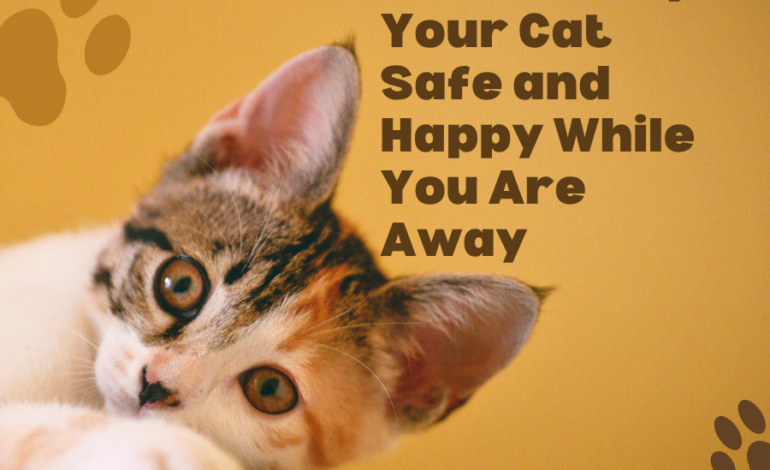
How to Keep Your Cat Safe and Happy While You Are Away
The door closes. Keys are grabbed. And the quiet assumption sets in that since cats sleep most of the day, everything will be fine.
Actually, quite a lot can go wrong. And most of the mistakes that create problems come from good intentions.
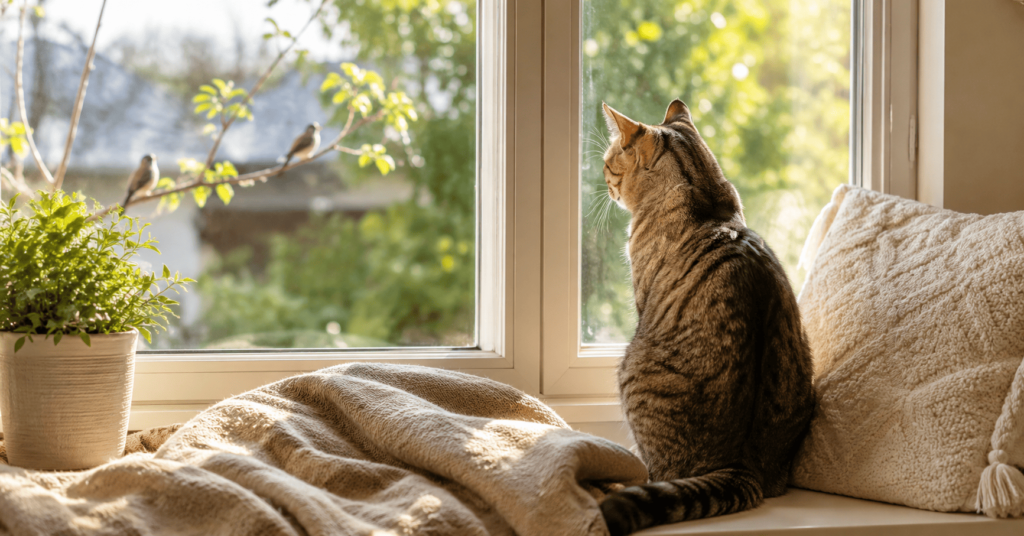
Cats form genuine attachments to their owners and experience real separation anxiety. Signs of a lonely or bored cat include increased vocalization, changes in eating habits, overgrooming, and destructive behavior. A bored cat is an unhappy cat, and an unhappy cat finds creative ways to make that known. Even cats with other pet companions can feel lonely when their primary human is absent.
The answer is straightforward: a hazard-free home, consistent routine, genuine mental stimulation, and reliable care for longer absences. Here is exactly what to do before walking out the door.
Cat lovers, don’t miss this, discover 15 mistakes that could be affecting your cat without you even realizing it:
How to Cat-Proof Your Home Before You Leave
The safest home for a cat left alone is one where every foreseeable hazard has already been removed. Not discovered after something goes wrong.
1. Remove Physical Hazards First
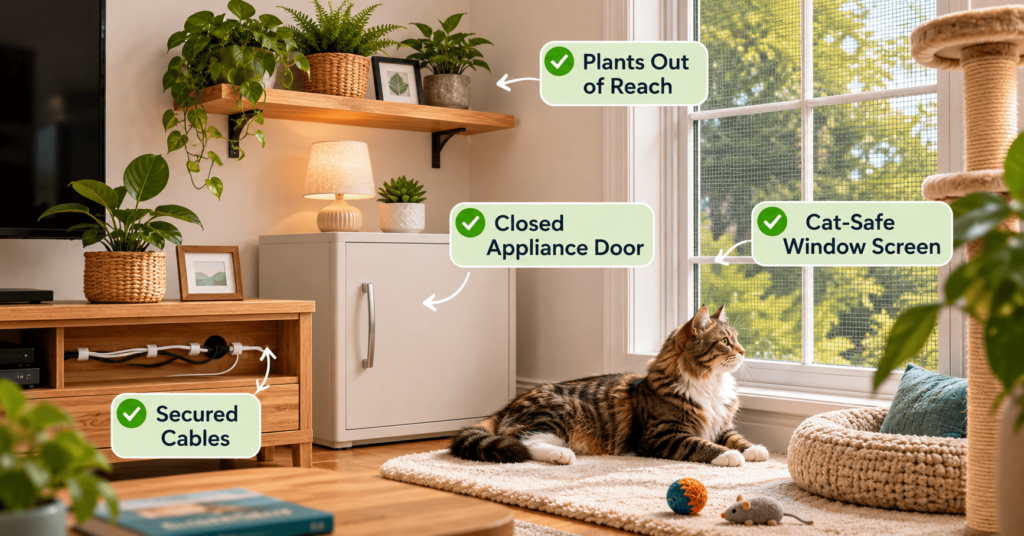
Loose cords and cables are one of the highest-risk items in any home with a bored cat. Chewing a live wire causes electric shocks, burns, and fire. Tuck cables away, bundle them, or cover them before leaving.
Small objects, strings, rubber bands, hair ties, threads, disappear into cats in seconds. Because of the structure of a cat’s tongue, swallowed items cannot easily come back up. Internal injuries from string ingestion routinely require emergency surgery. Clear surfaces of anything small enough to swallow.
Toxic plants are another overlooked hazard. Many common houseplants cause serious illness in cats, some in very small amounts. If there is any uncertainty about whether a plant is safe, move it out of reach entirely before leaving.
2. Close and Secure Critical Spaces
Washing machines, dryers, and dishwashers left open are genuine dangers. Cats climb into warm, enclosed appliances and fall asleep. If the appliance runs with the cat inside, the outcome is catastrophic. Closing these doors takes seconds and prevents an irreversible accident.
Keep the toilet lid closed. Bathtubs and sinks have smooth, slippery surfaces. A cat that falls in panics quickly, and even though cats can technically swim, exhaustion sets in faster than most owners expect.
Window screens deserve specific attention. Standard screens do not hold a cat’s weight. One bird flying past is enough for instinct to override any sense of height. Every open window needs a secure, pet-safe barrier before anyone leaves the house.
Use heavy objects to keep interior doors consistently fully open or fully closed. A door that swings shut traps a cat in a room with no litter box access and no escape route.
3. Check the Atmosphere
Leave the air conditioning on to maintain comfortable room temperature. Open the blinds so the cat has natural light and an outdoor view, but tuck away the blind cords entirely, they are a strangulation hazard that costs nothing to eliminate.
Do not leave candles burning or essential oil diffusers running. Scented candles release airborne chemicals that cats cannot properly process. Repeated exposure builds into breathing problems, lethargy, and organ stress over time. Clean, neutral air is the safest environment.
Leave out an unwashed piece of clothing or a blanket. Familiar human scent actively reduces separation anxiety and gives the cat a comfort anchor while the home is quiet.
Cat Enrichment Ideas That Actually Work While You Are Gone
Indoor cat stimulation does not require expensive equipment. The most effective enrichment combines passive entertainment, interactive toys, and environmental variety, all set up before leaving.
- Window Access Is the Highest-Return Investment
For an indoor cat, a window is not just a view. It is their entire world. Birds, passing people, leaves moving in the wind, all of this provides the mental stimulation that prevents boredom-driven behavior problems. A clear windowsill or a mounted window perch costs very little and delivers hours of engagement daily.
If windows face an unstimulating view or are blocked by furniture, Cat TV on YouTube streams hours of birds, squirrels, and fish specifically designed to hold a cat’s attention. Leave it playing on the television before heading out.
- Toys, Puzzles, and Cardboard Boxes
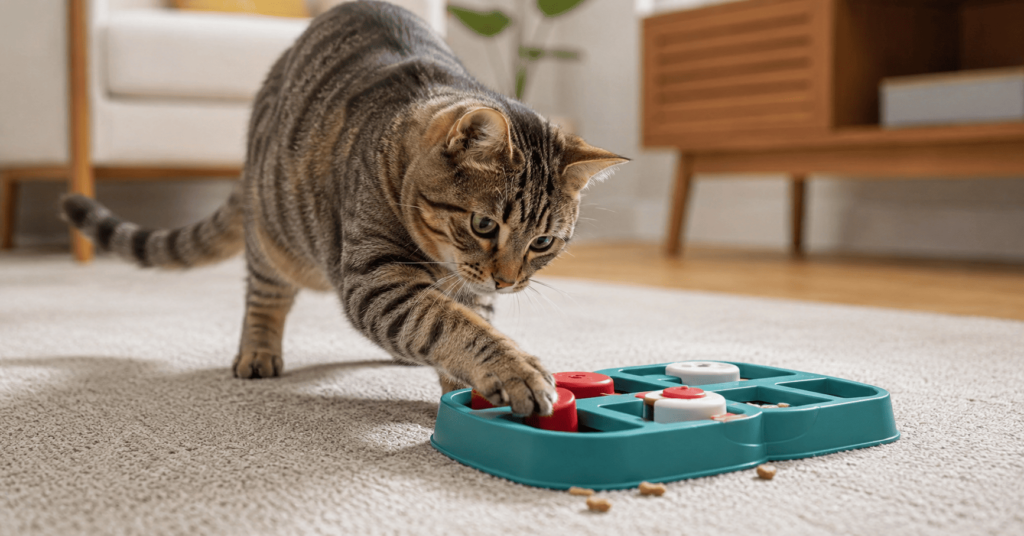
Puzzle feeders and treat-dispensing toys provide genuine mental engagement. An occupied cat is a content cat, and these toys deliver occupation that lasts.
Rotate available toys every couple of days. The same toy left out every day loses its value within 48 hours. Novelty is the mechanism that keeps enrichment working.
Cardboard boxes are consistently underrated. Cats use them simultaneously as scratching posts, forts, sleds, and napping spots. For extra engagement, cut cat-sized holes into the sides of one or two boxes, large enough for the cat to pass through easily. This small modification turns a free household item into hours of exploration.
Scratching posts, cardboard, and food puzzles together cover physical, cognitive, and territorial enrichment without requiring any significant investment.
- Sound and Atmosphere
A calm, quiet home is more comforting to most cats than constant background noise. Cats have far more sensitive hearing than humans. What registers as quiet television to a person feels loud, sharp, and unpredictable to a cat.
Sudden sounds from screens, shouting, alarms, barking dogs in commercials, register as real threats inside the cat’s territory. The cat does not understand the noise coming from the screen. To them, something unfamiliar and potentially dangerous is inside their space.
When background sound genuinely helps an anxious cat, soft music played quietly is the better option. Calm piano and string-based classical music works well. Avoid louder classical pieces featuring drums and brass instruments, these agitate rather than calm. The goal is atmosphere, not company.
- Consider a Second Cat
For cats showing consistent separation anxiety with no other pets in the home, a companion cat directly addresses the root cause. Two cats regulate each other’s energy, invent their own entertainment, and significantly reduce boredom-driven destructive behavior.
The honest reality: introducing a second cat brings initial tension. Structured introductions and patience are required. The long-term improvement in both cats’ wellbeing consistently justifies the adjustment period.
Things You Should Never Do When Leaving Your Cat Home Alone
Most home-alone mistakes come from good intentions. These are the ones that create the most problems.
- Emotional goodbyes create anxiety rather than reassurance. Cats read tone and behavior with precision. Unusual over-affection at departure signals that something is wrong. The cat carries that stress into the hours that follow. The best departure is calm, brief, and completely ordinary.
- Leaving a full food bowl seems logical. Most cats eat everything immediately and spend the rest of the day hungry. Dry food left out also oxidizes, loses nutritional value, and becomes stale and unappetizing. Controlled portions or an automatic feeder set to scheduled times solves both problems.
- One water bowl is not enough. A single bowl can be knocked over, dirtied, or blocked. A cat left without water for hours, especially one eating dry food, faces real dehydration risk. Place at least two water sources in different areas of the home before leaving.
- Closing too many interior doors removes the cat’s ability to patrol their territory. Cats move through their space, check rooms, and confirm that everything feels normal. This is not restlessness, it is a fundamental security behavior. More accessible space means fewer stress-driven problems, not more.
Cat Care While on Vacation: What Actually Works
For any absence lasting more than one day, automated systems alone are not sufficient. A cat needs human interaction, not just food and water.
A pet sitter should visit at least once or twice daily. Each visit covers fresh food, fresh water, a litter box scoop, and genuine interactive time with the cat. Introduce the pet sitter to the cat before departure, not on the first day of absence. The sitter follows the owner’s exact routine for feeding times, play sessions, and any medications.
Leave written instructions in a visible location: feeding schedule, veterinarian contact, emergency contact, and microchip information. Leave a spare key with a trusted neighbor as a backup emergency access point.
Scoop and refill litter boxes with fresh litter immediately before leaving. Feliway or calming pheromone diffusers are worth setting up for extended trips, one per 500 square feet of the home.
A Little Preparation Changes Everything
A safe, stimulating, routine-consistent environment is what a cat actually needs when their person is away. The mistakes that cause the most harm almost always come from good intentions. Knowing what not to do matters just as much as knowing what to do.
Bookmark this guide as a pre-travel checklist, share it with anyone who cares for a cat, and explore more cat behavior and wellness guidance at Meow Care Hub.
Frequently Asked Questions
Most cats handle short periods alone reasonably well. For absences beyond one day, a pet sitter should visit at least once or twice daily, not just to refresh food and water but to provide interaction and monitor stress. Signs of loneliness include excessive vocalization, appetite changes, overgrooming, and destructive behavior.
A calm, quiet home is usually more comforting than constant television or loud audio. Cats have highly sensitive hearing, and unpredictable sounds can increase stress. If background sound helps, soft instrumental music played at a low volume is the safest option.
A window perch with an outdoor view provides excellent stimulation. Puzzle feeders, rotating toys, cardboard boxes, scratching posts, and treat-dispensing toys also help prevent boredom. For anxious cats, calming cat-focused videos or nature sounds can provide additional enrichment during the day.
For cats showing ongoing signs of boredom or separation anxiety, a compatible companion cat can help significantly. Two cats often provide social interaction, play, and emotional comfort for each other. Proper introductions and gradual adjustment are important for long-term success.
Remove unsafe objects, secure windows and appliances, leave multiple water sources, and clean litter boxes before leaving. Keep familiar bedding or unwashed clothing nearby for scent comfort. Arrange daily pet sitter visits and leave feeding instructions, emergency contacts, and veterinarian information with a trusted person.