Why is my Cat Not Using the Litter Box? 9 Common Reasons and what to do

At a Glance
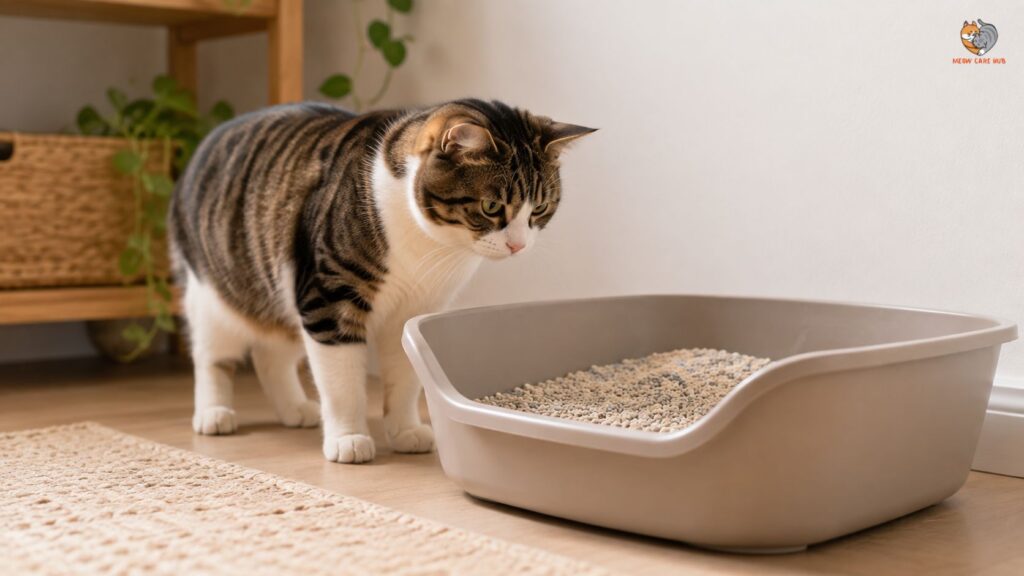
A cat not using the litter box is usually a sign of discomfort, stress, or a problem with the litter box setup rather than bad behavior. The most common causes are medical issues, a dirty or poorly located litter box, scented litter, too few boxes, and changes that make a cat feel unsafe or uncomfortable.
- Rule out urinary tract infections, bladder problems, arthritis, or kidney disease first
- Use a litter box about 1.5× your cat’s body length
- Choose unscented, clumping litter
- Keep one litter box per cat plus one extra
- Scoop daily and deep-clean weekly
- Place boxes in quiet, low-traffic areas away from food and water
- Use low-entry boxes for senior cats
- Avoid bleach and strong-smelling cleaning products
Introduction
A cat that suddenly starts peeing on the floor, the bed, or a favorite rug is often trying to communicate something important. Most cat owners assume the problem is stubbornness, revenge, or poor training, but feline behavior specialists know that litter box avoidance is usually a comfort, health, or environmental issue. A litter box that feels too small, smells too strong, sits next to a noisy washing machine, or stays dirty for too long can make even a well-trained cat avoid it. Medical conditions such as urinary tract infections, bladder inflammation, arthritis, and kidney disease can also cause a cat to associate the litter box with pain. Understanding the difference between a behavioral problem and a medical emergency is the fastest way to stop accidents and help a cat feel safe again.
Your cat’s litter box shouldn’t be a source of stress, try these tips today and see the difference by tomorrow.
What does it mean when a cat is not using the litter box?
A cat not using the litter box usually means the cat is experiencing pain, stress, fear, or discomfort with the litter box setup. Common causes include urinary tract infections, arthritis, a dirty litter box, scented litter, poor box placement, too few litter boxes, or sudden changes in the home environment.
What are the most common reasons cats stop using the litter box?
Brief transition emphasizing that many everyday litter box habits can make cats anxious, uncomfortable, and cause litter box avoidance. These are not just cleaning mistakes; they directly affect a cat’s comfort, behavior, and overall well-being.
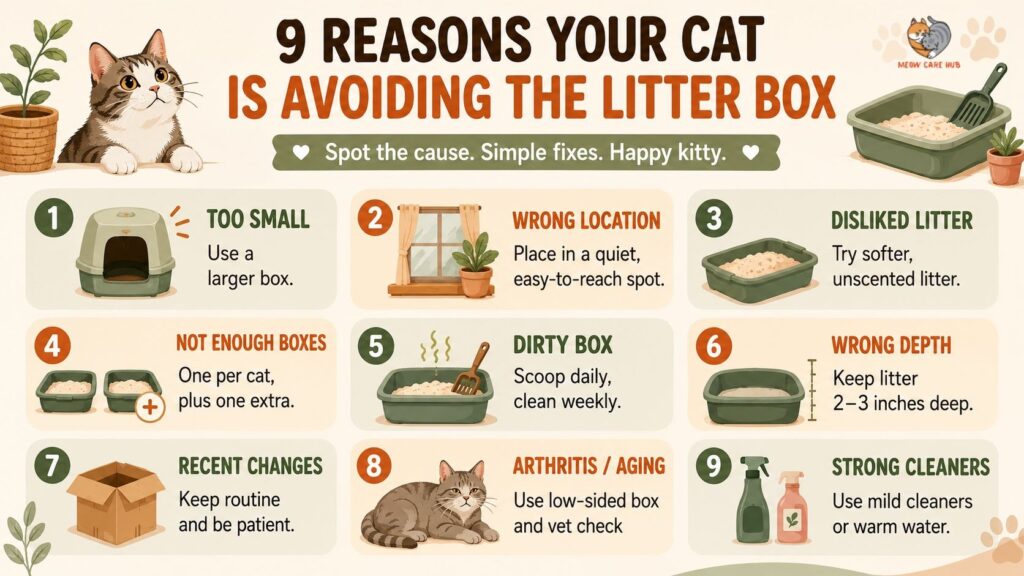
1. Is the litter box too small?
A litter box that is too small can make a cat feel cramped and stressed.
Imagine trying to use a bathroom where there is barely enough room to turn around. Many cats experience that feeling every day. Cats need enough space to dig, move, and cover their waste comfortably. A good rule is to choose a litter box that is about one and a half times your cat’s body length. A larger open litter box is often a simple change that can solve many litter box problems.
2. Is the litter box in the wrong location?
A noisy or high-traffic location can make a cat avoid the litter box. Many owners place litter boxes near washing machines, dryers, kitchens, or busy hallways. Loud noises and constant movement can make cats feel unsafe while they are using the box. Cats prefer quiet, private locations where they can enter and leave easily without being disturbed.
3. Does the cat dislike the litter?
Strong scents and uncomfortable textures are a major cause of litter box problems. Many scented litters are designed to smell pleasant to people, but a cat experiences those fragrances much more intensely. Artificial perfumes can be overwhelming and may cause a cat to avoid the litter box altogether. Most cats prefer unscented, clumping, dust-free litter with a texture similar to fine sand. If changing litter brands, make the transition gradually by mixing the new litter with the old one over several days.
4. Are there enough litter boxes in the home?
Too few litter boxes can create stress and competition between cats. In a multi-cat household, one cat may block another from using the box, or some cats may prefer separate boxes for urinating and defecating. A good rule is to provide one litter box per cat plus one extra. For example, a home with two cats should ideally have three litter boxes placed in different quiet areas of the house.
5. Is the litter box dirty?
A dirty litter box is one of the fastest ways to make a cat look for a cleaner place to go. Cats are naturally clean animals and many will avoid a box that has not been scooped regularly. Scoop waste at least once or twice a day and replace all litter weekly. Washing the box with mild soap and warm water helps remove odors that build up over time. Plastic litter boxes can absorb smells, so replacing heavily scratched boxes every year is often a good idea.
6. Is there too much or too little litter?
The depth of litter affects a cat’s ability to dig and bury waste comfortably. If there is too little litter, the cat may not be able to cover waste properly. If there is too much litter, the surface can become unstable and difficult to walk on. For most cats, a depth of about 2–3 inches is ideal because it allows natural digging behavior without making the box feel uncomfortable.
7. Has the litter box been moved recently?
Frequent location changes can confuse and stress cats because they rely heavily on routine and familiar environments. A litter box that keeps moving from one room to another may cause a cat to avoid it or become anxious. Once a suitable location has been found, keep the box there consistently. If it must be moved, do it gradually over several days so the cat has time to adjust.
8. Could arthritis or aging be making the box difficult to use?
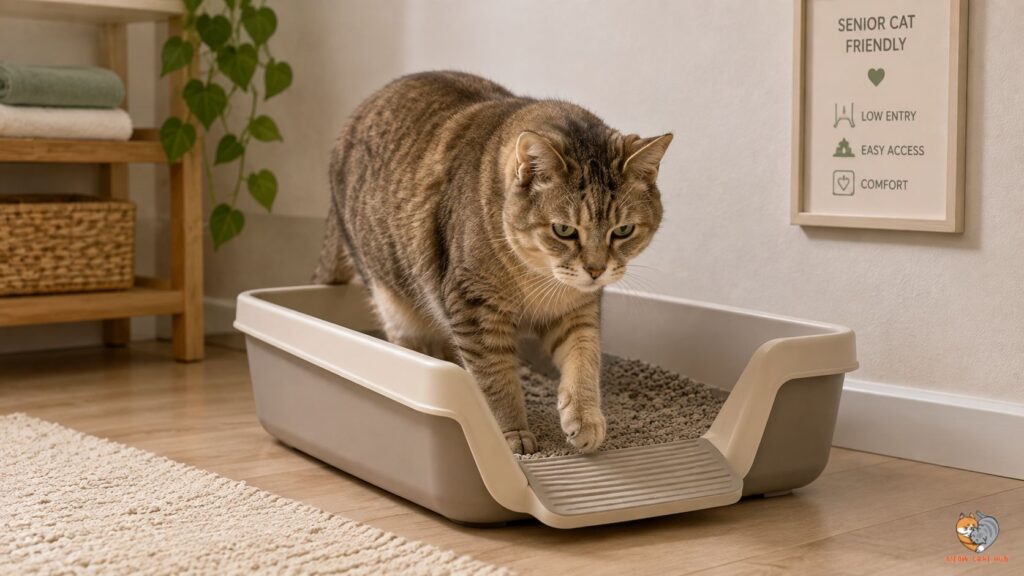
Senior cats often avoid litter boxes because climbing into high-sided boxes becomes painful. Arthritis and joint stiffness can make even a small step difficult, especially during the night. A low-entry litter box or a small ramp can make a significant difference and help older cats continue using the litter box comfortably.
9. Are harsh cleaning chemicals making the box smell unpleasant?
Bleach and strong cleaning chemicals can irritate a cat’s sensitive sense of smell. Even if the box looks clean, lingering chemical odors may make it unpleasant for a cat to use. Mild soap and warm water are usually enough for routine cleaning, and pet-safe cleaning products are a better choice when a deeper clean is needed. Avoid ammonia-based or heavily scented products whenever possible.
How can a cat owner tell if the problem is medical?
Sudden litter box avoidance should always be treated as a potential medical problem until proven otherwise.
Signs that require a veterinary visit
- Straining to urinate
- Frequent trips with little output
- Crying in the litter box
- Blood in the urine
- Excessive genital licking
- Sudden accidents in a previously trained cat
A cat that strains, cries, urinates frequently, or has blood in the urine should see a veterinarian immediately because urinary blockages and infections can become emergencies.
Cat not using litter box: causes and what to do
The table below helps identify the most likely cause of your cat’s litter box problem and the quickest action to take.
| What is happening | Most likely cause | What to do |
| Cat peeing outside litter box | Medical issue, stress, dirty box | Schedule a vet visit and clean the box daily |
| Cat avoiding litter box | Fear, location, scented litter | Move the box to a quiet area and switch to unscented litter |
| Litter box problems in a multi-cat home | Too few boxes | Add one litter box per cat plus one extra |
| Senior cat missing the box | Arthritis or mobility issues | Use a low-entry litter box or ramp |
| Cat suddenly stopped using litter box | Medical condition or sudden environmental change | Rule out urinary problems first, then evaluate the litter setup |
| Cat sniffs the box and walks away | Litter dislike or strong odors | Change to unscented clumping litter and wash the box with mild soap |
What should a cat owner do today to stop litter box accidents?
Start with the simplest fixes first while arranging a veterinary appointment if the behavior is sudden.
If a cat has started avoiding the litter box, begin with the simplest fixes first while arranging a veterinary appointment if the behavior is sudden. Scoop the litter box today, wash it with mild soap, check that the litter depth is around 2–3 inches, and move the box away from noisy appliances. Switch to unscented litter if scented products are being used, add another litter box if there is more than one cat, keep the box location consistent for at least two weeks, and replace any box that is too small or heavily scratched.
The litter box setup that solves most everyday litter box problems
The ideal litter box setup
A comfortable litter box setup can prevent many common litter box problems before they start. Most cats do best with a large open litter box, unscented clumping litter about 2–3 inches deep, and a quiet location away from food and water. Homes with multiple cats should provide one litter box per cat plus one extra. Daily scooping, weekly washing with mild soap, and a low-entry option for senior cats can make a noticeable difference in comfort and litter box consistency.
Conclusion
A cat that stops using the litter box is rarely being difficult; the behavior is usually a signal that something feels painful, frightening, or uncomfortable. The encouraging news is that many litter box problems can be solved with surprisingly small changes. A larger box, a quieter location, unscented litter, daily cleaning, and a setup that respects a cat’s natural instincts can often restore good litter box habits quickly. When accidents appear suddenly, especially alongside straining, crying, or frequent urination, a veterinary visit should come first. A thoughtful litter box setup is one of the simplest ways to improve a cat’s comfort, confidence, and quality of life.
For more practical, behavior-based cat care guides, visit the Cat Care section at Meow Care Hub and explore expert-backed tips that help cats feel safe, healthy, and understood every day.
FAQs
A sudden change is often caused by a medical problem such as a urinary tract infection, bladder inflammation, kidney disease, or arthritis. Stressful changes in the home, a dirty litter box, or a new type of litter can also trigger sudden litter box avoidance.
Two cats should generally have three litter boxes. The recommended rule is one litter box per cat plus one extra, placed in different quiet areas of the home.
Most cats prefer unscented, clumping, dust-free litter with a texture similar to fine sand. Strong fragrances and rough pellet textures can discourage litter box use.
No. Punishment usually increases stress and anxiety, which can make litter box problems worse. Identifying the underlying medical, environmental, or behavioral cause is far more effective.
A veterinary visit is recommended immediately if a cat is straining to urinate, crying in the litter box, producing little or no urine, showing blood in the urine, or suddenly stopping litter box use after previously using it normally.