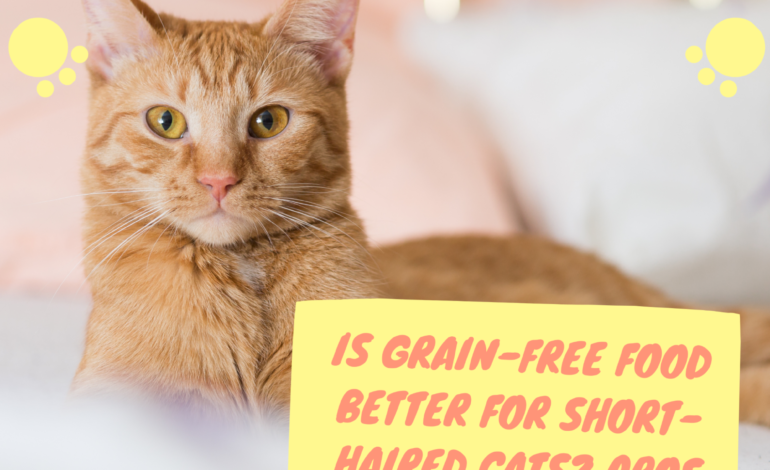
Is Grain-Free Food Better for Short-Haired Cats? Pros and Cons
If you’re a dedicated cat parent, you want your feline family member to lead a long, healthy and happy life — including what’s in their food bowl. The pet store shelves are lined with endless choices, but you can simplify. One of them you’ve likely heard of is “grain-free.” But is grain-free cat food better? And more specifically, is a grain-free diet suitable for short-haired cats?
In this article, we’ll explore the pros and cons of grain-free cat food, explain how it might (or might not) support the needs of short-haired cats, and help you make the best dietary choice for your cuddly feline.
What is Grain-Free Cat Food?

A grain-free diet implies that the food of your cat does not include grains such as wheat, corn, rice, barley, and oats. They are typical fillers in the average cat food, but every cat does not always need them, or do well with them.
Rather, grain-free cat food resorts to other sources of carbs such as peas, potatoes, lentils and other legumes. The ingredients are energy giving without grain-based fillers.
Why then, would one consider a grain-free diet for Short haired cats? Their nutritional requirements are not strikingly varying than the long-haired breeds but some of the cat owners may prefer grain-free to help them deal with food sensitivities, allergies or allow them to trace a more natural, protein rich diet.
Learning the ingredients of a grain-free formula will assist you in determining whether it is suitable for your short-haired cat.
Does Grain-Free Mean Gluten-Free?
Yes — grain-free cat food is inherently gluten-free. Because gluten is a protein in some types of grain, such as wheat, barley, and rye, when you remove all the grains from the recipe, you naturally remove gluten as well.
With that being said, cats are rarely gluten sensitive. Unlike for humans, for most cats gluten doesn’t lead to any adverse reactions. So although a grain-free diet will eliminate gluten, it’s generally not a medical requirement for cats. Unless your vet prescribes a particular course, gluten is not something most “cat parents” should lose sleep over.
Why Grain-Free Cat Food Became Popular

- Influence of Human Diet Trends
As people began to adopt low-carb, gluten-free and Paleo diets, those same attitudes began to reshape their pets’ diets as well. Pet parents sought “healthier,” grain-free options for their cats. - Marketing and Perceived Health Benefits
Pet food brands seized on the fad, marketing grain-free products — which can also contain other ingredients like carby potatoes and peas instead of grains like wheat and rice — as more natural and healthy for cats, offering “premium” options that are, in many cases, not backed up by science. - Demand for High-Protein, Low-Carb Diets
Cats are obligate carnivores, or animals whose diets consist mainly of meat. The result is a boom in grain-free diets, which are usually advertised as high-protein, low-carb options that hearken to a more ancestral, meat-focused diet.
Pros and Cons of Grain-Free Cat Food
| Pros | Cons |
| May benefit cats with diagnosed grain allergies or sensitivities | Not proven to be better for all cats, including short-haired breeds |
| Some report shinier coats and less shedding (anecdotal) | Can lead to nutritional imbalance if poorly formulated |
| Often high in animal-based proteins | May contain excessive carbs from alternative sources like peas or potatoes |
| Mimics a more natural carnivorous diet | Risk of taurine deficiency if not properly supplemented |
| Free from potential irritants like gluten | Often more expensive than grain-inclusive cat foods |
Do Short-Haired Cats Need a Grain-Free Diet?
In short—no, a short hair cat grain free diet is not a must. Grain free diets are not coat length or breed specific.
A cat’s dietary needs are affected less by whether they have short or long fur and more by their age, activity level and underlying health conditions.
For the most part, healthy shorthaired cats do not need a grain-free diet unless your veterinarian has recommended it for a specific health issue, such as a food sensitivity, or a digestive issue.
Are Grain-Free Diets Safe for Cats?
- No Proven Health Risks for Cats
As for cats, there is no scientific research connecting grain free diets to any cat’s health issues. This is the opposite of a problem some studies raised for dogs. - Generally Safe, But Not Always Necessary
Unless recommended by a veterinarian due to allergies, sensitivities, or other health concerns, grain-free diets for cats do not require additional may not provide health benefits. - Vet Guidance Is Key
Veterinarian provided instruction is especially vital if you are looking to switch your cat’s diet to grain free, as for healthy short hair.
What About Cats with Grain Allergies?


Grain allergies in cats are often misconstrued. Rarely are true grain allergies seen in the cat world, as kitties are rarely if ever allergic to the plant-based protein source, grains. When placed on a food with grain, and then developing food sensitivities, it is not the grain that is the concern, but most likely the animal protein, whether chicken, beef or fish.
Hence, then, switching to a grain-free diet, without guidance, may not fix an allergy problem, as only a veterinarian may determine if the cat is food allergic typically through an elimination diet and observation.
If your cat is showing allergy signs, your best way to determine their allergy is their vet and not to speculate that it may be a grain issue.
Choosing the Best Diet for Your Short-Haired Cat
- Consult Your Veterinarian First
Consult with your vet before making any big diet changes, such as switching to a grain-free formula. - Monitor for Changes
Watch your cat’s digestion, skin, coat condition and energy levels after any diet change. - Choose Complete and Balanced Formulas
If you’re grain free, make sure the food is nutritionally complete and balanced and high in animal protein and nutrients. - Consider Your Cat’s Unique Needs
Choose a base diet based on age, weight, activity level, and medical history and not just coat type.
Few Grain- Free Cat Food Recommendations for Short Haired Cats
| Product Name | Key Benefits | Ideal For | Buying Link |
| Blue Buffalo Wilderness High Protein Grain-Free Salmon Dry Cat Food | High protein, omega-3 fatty acids for healthy skin and coat, antioxidant-rich | Cats needing coat support and muscle maintenance | Link |
| Purina Beyond Simply Grain-Free Wild Caught Whitefish & Cage Free Egg Dry Cat Food | No artificial colors/preservatives, rich in lean protein, easy to digest | Cats with sensitive stomachs or ingredient sensitivities | Link |
| Farmina N&D Grain-Free Prime Chicken & Pomegranate | High-protein, antioxidant-rich; supports skin and coat health | Short-haired cats needing a sleek, shiny coat | Link |
| Natural Balance L.I.D. Grain-Free Salmon & Green Pea Dry Cat Food | Limited ingredients for allergy-prone cats, easy to digest, supports shiny fur | Cats with food sensitivities or allergies | Link |
| ZIWI Peak Air-Dried Grain-Free Cat Food (Chicken) | Air-dried raw, no peas/lentils/potatoes, nutrient-dense formula | Cats with high protein needs or on raw/ancestral diets | Link |
Conclusion: Should You Go Grain-Free?
The diet of most short-haired cats including grains is very healthy and balanced. Although a grain-free diet can be beneficial in some scenarios like food sensitivities or food allergies that have been diagnosed, it is not necessarily healthier to your feline friend.
The best decision? Speak to your vet, and be mindful of your cat as an individual with his or her own health requirements, and monitor reactions towards any change to the diet.
Here at Meow Care Hub, we will guide you through these choices with advice, tips and recommendations you can rely on because your cat deserves only the best.
FAQs: Grain-Free Diet for Short-Haired Cats
Q1. Is grain-free cat food better for short-haired cats?
Not necessarily. There’s no scientific evidence that grain-free food is better for short-haired cats. Coat length doesn’t determine dietary needs—overall health and allergies do.
Q2. Can a short-haired cat benefit from a grain-free diet?
Yes, if the cat has a diagnosed grain allergy or sensitivity. However, such cases are rare. Consult your vet before switching to a grain-free diet.
Q3. What are the disadvantages of a grain-free diet for cats?
Potential downsides include nutritional imbalance, excessive carbs from substitutes like peas or potatoes, higher cost, and risk of taurine deficiency if not well-formulated.
Q4. Does grain-free mean gluten-free in cat food?
Yes. Since gluten is found in grains, any grain-free cat food is automatically gluten-free.
Q5. What’s the best food for a healthy short-haired cat?
A balanced diet that includes high-quality protein, essential nutrients, and is approved by a veterinarian. Whether it includes grains or not depends on your cat’s unique health needs.