Human Foods Your Cat Can & Cannot Eat: The Definitive A–Z Guide
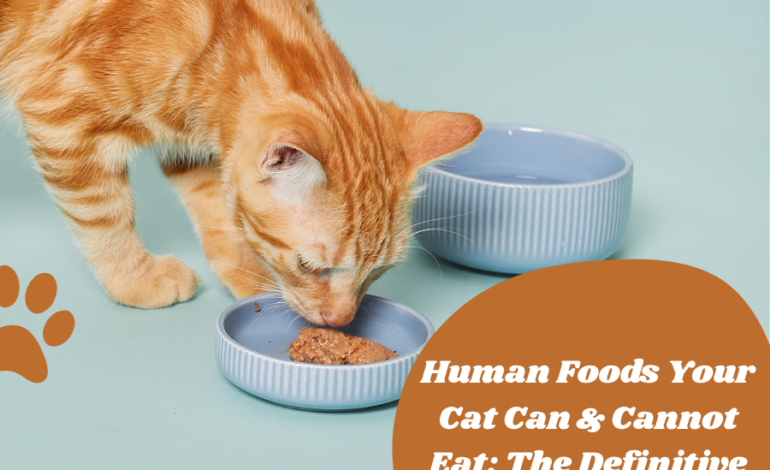
Sharing food with your cat might feel harmless, but the line between safe and dangerous is thinner than most people think. This guide breaks down exactly which human foods are safe, which need caution, and which are strictly off-limits. It explains how everyday ingredients like garlic, chocolate, or even seasoning can quickly turn toxic, often in ways owners don’t expect. Alongside clear examples, it offers simple rules to keep treat time safe and stress-free. At its heart, it’s about awareness, helping you enjoy those small bonding moments with your cat without putting their health at risk.
It’s Thanksgiving. The cat jumps on the counter, swipes a piece of plain turkey, and everyone laughs. Then someone offers a sliver of onion from the stuffing, because it’s just a tiny piece, right? That single moment could end the evening with an emergency vet call.
The line between harmless and dangerous in a cat’s diet is thinner than most owners realize. Garlic is five times more toxic to cats than onions. Chocolate can cause seizures and death even in small amounts. And here’s something most people don’t know: cats cannot taste sweetness at all, which means they have zero instinctive aversion to foods that could kill them. They’ll investigate a dangerous food with the same casual curiosity as a safe one.
Before the next dinner table moment happens, here’s exactly what’s safe, what needs caution, and what should never go anywhere near the food bowl.
Before You Share a Bite- Three Rules That Apply to Everything
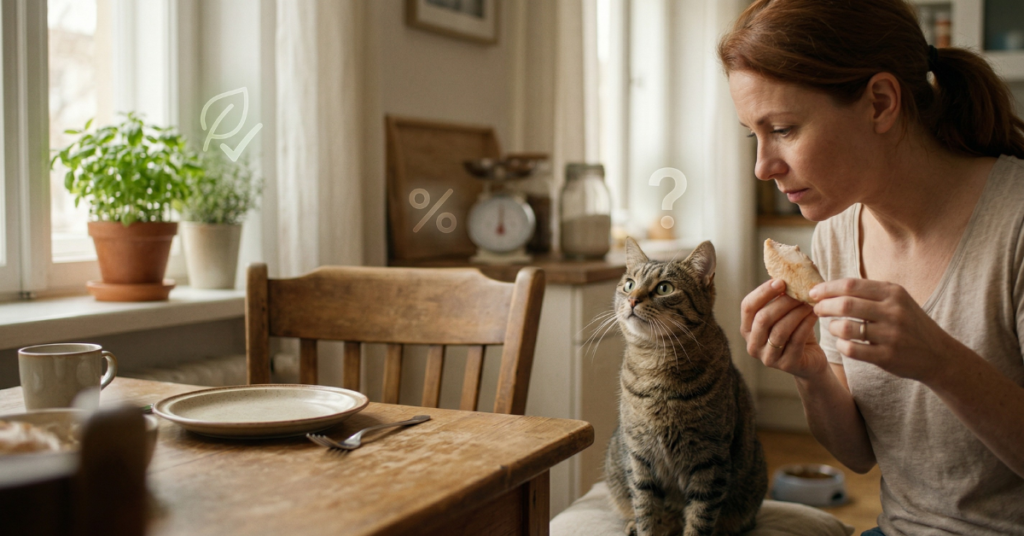
One: human food should never exceed 10% of a cat’s daily calorie intake. It’s a treat, not a meal, and treating it otherwise creates nutritional imbalances over time.
Two: always plain and unseasoned. Salt, garlic powder, onion powder, and butter turn genuinely safe foods dangerous in an instant. The base ingredient isn’t always the problem, the seasoning almost always is.
Three: introduce any new food slowly and one at a time. If vomiting, diarrhea, or unusual lethargy appear within 24 hours, stop immediately and call the vet.
Human Foods Cats Can Eat- Safe Options Straight From the Kitchen
Proteins- The Safest Category
Cats are obligate carnivores. Protein is where they thrive, and cooked, plain protein from the kitchen is generally the safest human food category to share.
Plain cooked chicken is the gold standard, pull it from the breast, skip the skin (too high in fat), remove every bone, and keep it completely unseasoned. Plain rotisserie chicken works well as long as it hasn’t been seasoned. Cooked turkey follows the same rules, plain deli turkey or unseasoned roasted turkey is a treat many cats genuinely enjoy.
Cooked salmon and shrimp both bring omega-3 fatty acids that benefit coat condition and heart health. With salmon, remove every bone carefully before serving. Shrimp should be fully cooked, deveined, and plain, nothing else.
Scrambled or boiled eggs are an excellent protein source and easy to prepare. The one firm rule: always cooked. Raw eggs carry Salmonella and E. coli risk, for the cat and for anyone handling the food afterward.
Vegetables Worth Sharing
Cooked carrots are one of the better vegetable options, beta carotene supports eye health and coat condition, but they must be cooked before serving to eliminate the choking risk that raw carrots present.
Green beans are low calorie, high in iron and protein, and particularly useful as a treat for overweight cats. Fresh, frozen, or canned all work, just make sure canned versions are sodium-free.
Plain cooked or canned pumpkin puree deserves a special mention. Two to three spoonfuls added to food actively helps with both diarrhea and constipation. It’s one of the most practically useful safe foods on this list and worth keeping in the pantry.
Cucumber is high in water content and makes a surprisingly good snack for cats that don’t drink enough, peel it and slice it thin before serving. Steamed broccoli is fine in small occasional amounts but can cause constipation in larger quantities.
Fruits- Small Amounts Only
Most cats aren’t interested in fruit, and that’s fine, because fruit is high in sugar and should only ever be an occasional small treat. But for cats that show interest, blueberries are the safest option: antioxidant-rich, easy to serve, and cut in half to prevent choking. Frozen blueberries work well as a summer cooling treat.
Seedless watermelon is over 90% water and contains vitamins A, B, and C, a hydrating warm-weather snack as long as the rind and all seeds are removed. Banana is safe in small nibbles, high in potassium and fiber, but also high in sugar, so keep portions genuinely small. Peeled apple slices are fine, always remove the peel (pesticide risk) and every single seed (cyanide).
Grains
Plain cooked oatmeal, high in fiber and iron, good for digestion, and must be completely plain and unsweetened. Flavored instant oatmeal packets are not the same thing. Plain cooked brown rice helps with digestive upset and diarrhea in small amounts. Neither grain offers real nutritional value to an obligate carnivore, but both are safe as occasional additions.
Human Foods That Need Real Caution
Canned tuna made for humans is safe as an occasional treat, one tablespoon maximum. Regular large servings are high in unsaturated fats and cause health problems over time.
Peanut butter is safe in tiny amounts, one teaspoon at most, but it’s high in fat, a choking hazard due to its sticky texture, and carries allergy risk. More importantly: check the label every single time. Any peanut butter containing xylitol is immediately toxic.
Plain cooked potato is fine, but raw potato contains solanine, a toxin that disappears during cooking. Only plain boiled or baked, never fried, never seasoned. Cooked plain bacon or ham can be offered as a tiny occasional treat, cut to kibble size, because the fat and sodium content is genuinely high. Cheese is an option for some cats in very small amounts, a harder cheese like cheddar or a low-lactose variety, but most adult cats are lactose intolerant, so keep it rare and watch for digestive reaction.
Foods Cats Cannot Eat- These Are Non-Negotiable
The Allium Family
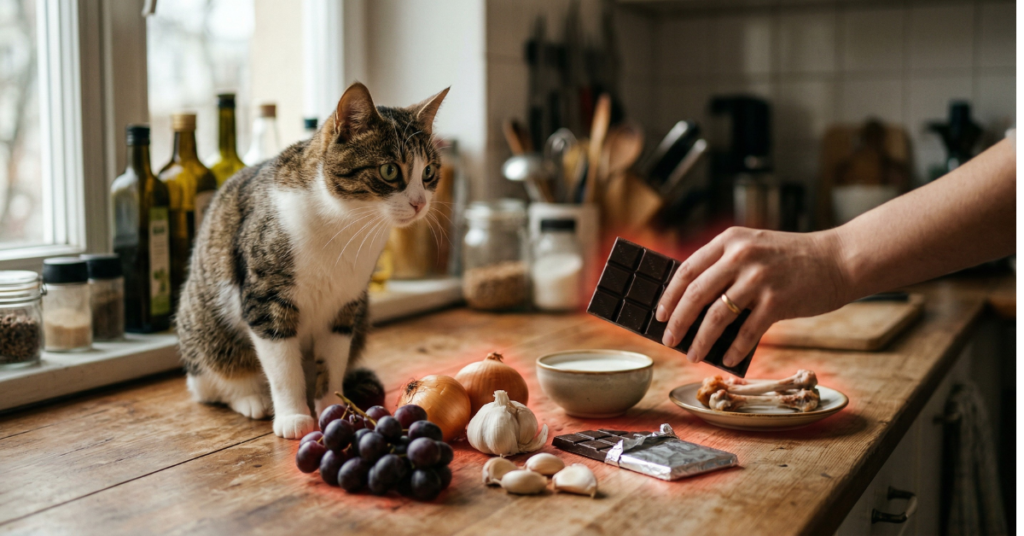
Onions, garlic, chives, and leeks are toxic to cats in every form, raw, cooked, powdered, and dehydrated. Garlic is five times more toxic than onions. Both cause red blood cell damage that leads to anemia, and the damage accumulates, a single large serving and repeated small amounts over time are equally dangerous.
This is why “plain and unseasoned” is the most important rule in this entire guide. Garlic powder and onion powder are concentrated forms that hide in almost every American seasoning blend.
Common Foods That Are More Dangerous Than They Look
BBQ sauce and marinades almost always contain garlic and onion powder, never let a cat lick a sauced plate or a piece of grilled meat.
Thanksgiving stuffing is one of the highest-risk dishes in a US household for cats. It typically contains onion, garlic, butter, and concentrated seasoning in a single dish, every ingredient is a problem.
Seasoned deli meats are another hidden risk. Many American deli meats contain garlic powder or onion powder in the seasoning blend. Always check before offering any.
Pumpkin pie filling contains nutmeg, which is toxic to cats, plus significant added sugar. Plain pumpkin puree and pumpkin pie filling are not the same product, this distinction matters.
Hot dogs and sausages are extremely high in sodium and fat and almost always contain garlic and onion powder. Never feed them.
Macaroni and cheese combines dairy with processed additives, digestive upset is essentially guaranteed for most adult cats.
The Immediate Emergency List
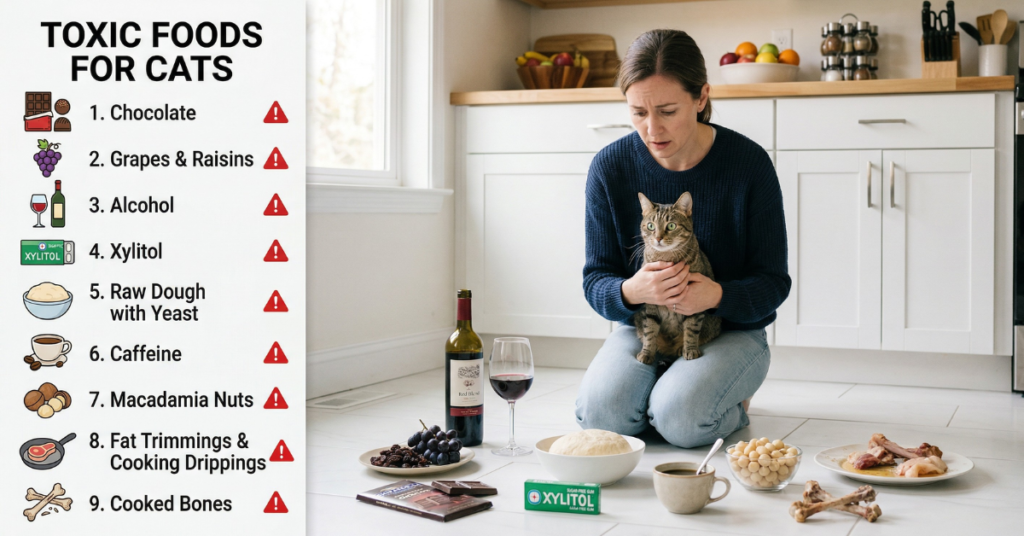
- Chocolate: contains both theobromine and caffeine. Causes heart problems, muscle tremors, seizures, and death. Dark chocolate and baking chocolate are the most dangerous. The fact that cats can’t taste sweetness does not make this safer, the toxicity has nothing to do with flavor.
- Grapes and raisins: linked to kidney failure. No safe amount has been established. Any ingestion warrants a vet call.
- Alcohol: even tiny amounts cause digestive upset, disorientation, breathing failure, coma, and death. A cat lapping from an unattended glass is a genuine emergency.
- Xylitol: found in sugar-free gum, certain peanut butters, sugar-free baked goods, and some candy. Check labels on anything sugar-free before it’s anywhere near the cat.
- Raw dough with yeast: yeast produces carbon dioxide and alcohol inside the stomach. The dough expands and can require surgical removal.
- Caffeine: coffee grounds left on the counter, tea bags in the trash, energy drink cans, all real household risks. Causes increased heart rate, tremors, and seizures.
- Macadamia nuts: very toxic to cats. All nuts should be avoided due to high fat content and pancreatitis risk.
- Fat trimmings and cooking drippings: extremely high in fat, significant pancreatitis risk. Never feed meat scraps from the pan.
- Cooked bones: become brittle and splinter, can puncture the throat and cause serious internal damage.
My Cat Just Ate Something Dangerous- Here’s Exactly What to Do
Stay calm, move fast. Identify exactly what was eaten and estimate how much. Then call the vet or the ASPCA Animal Poison Control Center immediately, don’t wait for symptoms to appear. Many toxins cause damage that isn’t visible until hours later.
Do not induce vomiting unless a vet specifically instructs it, with some toxins, vomiting causes additional harm. Bring the food packaging if possible, the ingredient list directly helps the vet assess the risk and make treatment decisions. Note the exact time of ingestion, this information matters for how treatment is timed.
The Dinner Table Doesn’t Have to Be a Danger Zone
Sharing food with a cat is one of those small, affectionate moments that makes pet ownership genuinely enjoyable. Nothing here is meant to eliminate that. The goal is to make sure those moments are safe ones.
The danger almost never lives in the base ingredient. It lives in the seasoning, the sauce, the sweetener, or the one ingredient nobody thought to check. A plain piece of turkey is a perfectly fine treat. That same turkey from the stuffing dish is an emergency.
Bookmark this page as a quick reference for the whole household, because the person who doesn’t know these rules is often the one offering the treat. Share it with anyone who lives with cats, and explore more practical cat health and nutrition guides at Meow Care Hub.
Frequently Asked Questions
1. Can cats eat chicken from my dinner plate?
Yes, as long as it is completely plain and fully cooked. The risks are almost always in the seasoning (garlic and onion powder appear in more spice blends than most people realize), the skin (too high in fat), and the bones (which splinter and cause internal damage). Plain boiled or baked chicken breast is one of the safest human food treats available.
2. My cat stole a piece of onion. Should I go to the vet?
Call the vet immediately, do not wait for symptoms. Onion toxicity damages red blood cells over time, meaning a cat can appear completely fine for days before signs of anemia appear. Any confirmed ingestion, regardless of the amount, warrants a same-day vet call.
3. Cats can’t taste sweetness, does that make chocolate safer?
No. Cats genuinely cannot taste sweetness, but chocolate’s danger comes from theobromine and caffeine, not sugar. Those compounds are toxic regardless of whether the cat can taste or enjoy the flavor. There is no safe amount of chocolate for a cat.
4. Can I give my cat milk as a treat?
Most adult cats are lactose intolerant, the enzyme that digests lactose decreases naturally after weaning. Cow’s milk causes vomiting and diarrhea in most adults. The image of a cat happily lapping milk is one of the most persistent myths in pet care. If dairy must be offered, a very small piece of hard cheese occasionally is the least risky option.
5. Which everyday foods catch cat owners off guard the most?
Several common staples are higher risk than they appear. BBQ sauce and marinades contain garlic and onion powder. Thanksgiving stuffing combines multiple toxic ingredients in one dish. Seasoned deli meats often hide garlic powder in the blend. Pumpkin pie filling contains toxic nutmeg (plain pumpkin puree is a completely different story). Sugar-free products, including certain peanut butters, contain xylitol. The pattern is consistent, the danger is almost always in the seasoning or additive, not the base food itself.
This article is intended for informational purposes only. Always consult a licensed veterinarian if you suspect your cat has eaten something toxic.